You Won’t Believe What This Indian City’s Architecture Hides
Hyderabad isn’t just about biryani and pearls—its skyline tells a story centuries in the making. From domed palaces to futuristic towers, the city blends eras in ways you have to see to believe. I walked its streets, eyes tilted upward, stunned by how history and modernity shake hands here. This is more than a travel guide—it’s an invitation to look closer, dig deeper, and let architecture lead the way. Beneath the surface of bustling bazaars and crowded lanes lie silent storytellers: arches that once echoed with royal decrees, minarets that called faithful generations to prayer, and glass-clad towers rising where farmers once tilled the soil. To walk through Hyderabad is to journey through time, where every building bears witness to power, faith, innovation, and resilience.
A City Built on Layers of Power
Hyderabad’s architectural identity was not born overnight but forged through centuries of shifting rule, cultural exchange, and visionary leadership. The city’s foundation lies in the ambitions of the Qutb Shahi dynasty, who established their capital in the 16th century and infused it with Persian-inspired design principles. Theirs was a kingdom shaped by artistry and strategic foresight, evident in the grand domes, arched gateways, and intricate stucco work that still stand today. These early structures were not merely functional—they were declarations of sovereignty, blending Islamic aesthetics with local Deccan craftsmanship.
When the Mughal influence spread into southern India, it left subtle yet significant marks on Hyderabad’s built environment. Though never fully absorbed into the Mughal Empire, the region adopted certain architectural elements such as chhatris (elevated dome-shaped pavilions), jali screens (pierced stone latticework), and symmetrical garden layouts. Later, under the Asaf Jahi rulers—also known as the Nizams—the city expanded dramatically, becoming one of the wealthiest princely states in colonial India. This era saw the fusion of European neoclassical styles with traditional Indo-Islamic forms, creating palaces and public buildings that reflected both global tastes and regional pride.
The British colonial presence introduced another layer, particularly in administrative buildings and railway infrastructure. While they did not reshape the city center as they did in Bombay or Calcutta, their legacy can be seen in the wide boulevards, clock towers, and institutional architecture that blend Victorian proportions with tropical adaptations like verandahs and high ceilings. Today, modern India adds its own chapter through eco-conscious skyscrapers, smart city planning, and preservation efforts that honor the past without being bound by it. Each ruler, each era, carved their mark into Hyderabad’s urban fabric—making the city a living archive of South Asian history.
Charminar: More Than a Postcard Icon
Standing at the heart of old Hyderabad, the Charminar is more than a symbol—it is the city’s beating pulse. Completed in 1591 by Sultan Muhammad Quli Qutb Shah, this four-towered monument rises 56 meters above the chaotic charm of Laad Bazaar, its arches framing a sky often dotted with kites and laundry lines. The name itself means “Four Minarets,” and each tower points toward one of the cardinal directions, originally designed to serve as both religious and urban planning landmarks. While many visitors come for a quick photo, few pause to consider the deeper meaning behind its construction.
Historians widely believe the Charminar was built to commemorate the end of a devastating plague that had gripped the region. It also served as a mosque on its upper floors, reinforcing the ruler’s devotion and desire to protect his people through spiritual means. The structure combines Persian architectural ideals with Indian construction techniques, featuring double-storied arcades, bulbous domes, and delicate stucco ornamentation. Inside, narrow staircases spiral upward, offering panoramic views of the surrounding bazaar—a vibrant tapestry of spice stalls, bridal jewelry shops, and street food vendors.
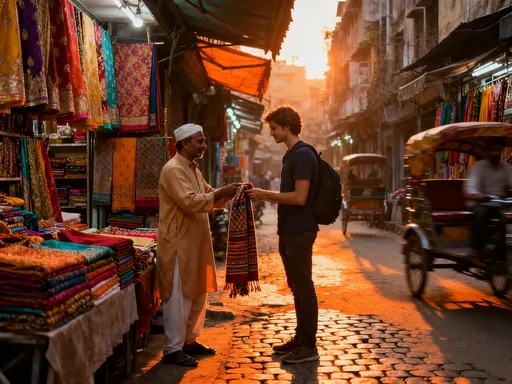
What makes the Charminar truly remarkable is not just its beauty but its endurance. For over 400 years, it has stood amid floods, wars, and rapid urbanization, yet remains a central node in daily life. The surrounding neighborhood thrives with commerce and culture, where the scent of incense mingles with the sizzle of kebabs and the call to prayer echoes from nearby mosques. Walking through the lanes around Charminar feels like stepping into a living museum, where history isn’t preserved behind glass but worn into the cobblestones and carried in the voices of shopkeepers who’ve worked here for generations. To understand Hyderabad, one must begin here—not just seeing the monument, but feeling its rhythm.
Golconda Fort: Where Engineering Meets Echoes
Perched on a granite hill nearly 120 meters above sea level, Golconda Fort stands as a testament to military genius and architectural ingenuity. Originally a mud fort in the 13th century, it was rebuilt and expanded by the Qutb Shahi rulers into an impregnable fortress complex spanning over 11 kilometers of outer walls. Its strategic location allowed sentries to spot approaching armies from miles away, while its multi-layered defense system—including eight gateways designed to slow invaders—made direct assault nearly impossible. But beyond its martial strength, Golconda reveals a civilization deeply attuned to acoustics, water management, and celestial observation.
One of the most astonishing features of the fort is its acoustic engineering. At the main entrance, a handclap at the base of the dome above triggers a sound wave that travels all the way to the highest point of the citadel—the royal pavilion—alerting guards of potential danger. This “sound-and-signal” system ensured rapid communication across vast distances within the fort, a remarkable feat for the 16th century. Visitors today can still test this phenomenon, their claps echoing through time and space, connecting them momentarily to the sentries who once relied on it for survival.
The fort also housed an advanced water supply system, with underground aqueducts channeling rainwater to reservoirs and fountains throughout the complex. Ingenious wind towers and thick stone walls helped regulate temperature, making life bearable even during the scorching summer months. Once home to royalty, soldiers, artisans, and traders, Golconda was more than a military stronghold—it was a self-sustaining city. It was also the epicenter of the global diamond trade, housing mines that produced legendary gems like the Koh-i-Noor and the Hope Diamond. Though those riches are long gone, the ruins still whisper tales of opulence and ambition.
Nearby lie the Qutb Shahi Tombs, a serene necropolis set in lush gardens. Each tomb is crowned with a distinct dome, some echoing Persian styles, others incorporating Indian motifs. The largest belongs to Muhammad Quli Qutb Shah, founder of Hyderabad, and features a unique cooling system where wind channels through underground tunnels to lower the temperature inside. Together, the fort and tombs form a powerful narrative of life, death, defense, and legacy—a journey through the soul of a dynasty that shaped a city.
The Palaces That Time Forgot
While Hyderabad’s forts and mosques speak of power and piety, its palaces reveal the private world of its rulers—their tastes, routines, and cultural aspirations. Among them, Chowmahalla Palace stands as a masterpiece of symmetry and grandeur. Built between the 18th and 19th centuries by the Asaf Jahi dynasty, the palace served as the official seat of the Nizams during ceremonial functions. Its name means “Four Palaces,” referring to the four distinct courtyards arranged around a central axis, echoing the Persian concept of cosmic order. From the grand entrance arch to the cool marble halls and intricate mirror work, every detail reflects a harmonious blend of Persian, Indo-Saracenic, and European influences.
After decades of neglect, Chowmahalla underwent meticulous restoration in the early 2000s, returning it to its former glory. Today, visitors walk through the same corridors where treaties were signed and celebrations held, marveling at the hand-painted ceilings, teakwood columns, and Belgian crystal chandeliers. The Khilwat Mubarak, or Durbar Hall, remains the centerpiece—a majestic space where the Nizam once received dignitaries beneath a soaring cupola. Guided tours offer insights into royal customs, including how courtyards were used for elephant processions and moonlight gatherings.
Lesser-known but equally breathtaking is Falaknuma Palace, perched on a hilltop 320 meters above the city. Built in the late 19th century by Nawab Vikar-ul-Umra, it was later acquired by the sixth Nizam, who spent two years furnishing it with treasures from Europe. The palace blends Italianate architecture with Mughal detailing—marble staircases, Venetian chandeliers, and a library lined with English leather-bound books. Its dining table, said to seat 101 guests, was specially designed so the host could converse with each person without raising his voice. Now operating as a luxury hotel, Falaknuma allows guests to experience royal living firsthand, though day visits can be arranged with advance booking.
These palaces do more than showcase opulence—they preserve a way of life that valued art, etiquette, and cosmopolitanism. They remind us that architecture is not only about shelter but about identity, memory, and continuity. As cultural landmarks, they bridge past and present, inviting reflection on how heritage can be honored without being frozen in time.
Temples, Mosques, and Modern Faith Spaces
Hyderabad’s spiritual landscape is as diverse as its architectural one, with places of worship standing side by side in peaceful coexistence. Among the most revered is the Mecca Masjid, one of the largest mosques in India, located just a kilometer west of Charminar. Construction began in the early 17th century under Muhammad Quli Qutb Shah and was completed nearly 80 years later by Aurangzeb. Built from massive blocks of granite quarried from distant hills, the mosque’s courtyard can accommodate up to 10,000 worshippers. Its central arch is said to be made from bricks brought from Mecca—hence the name—adding deep religious significance.
The mosque’s scale is matched by its solemn beauty: broad courtyards shaded by towering palms, arched prayer halls lined with calligraphic inscriptions, and a mihrab (prayer niche) adorned with delicate floral patterns. Unlike many historic mosques, Mecca Masjid remains fully functional, drawing devotees daily for prayers and serving as a center for community life. Its proximity to bustling markets and heritage sites underscores Hyderabad’s tradition of interfaith harmony, where faith and commerce coexist without conflict.
In contrast, the Birla Mandir offers a more modern expression of devotion. Constructed in 1976 by the industrialist Birla family, this Hindu temple sits atop Naubath Pahad, one of the city’s highest points, offering panoramic views. Built entirely of white marble, its design follows the North Indian Nagara style, with a central shikhara (spire) rising 54 meters. The temple complex includes shrines dedicated to Vishnu, Shiva, and Durga, as well as a meditation hall and landscaped gardens. Its location—visible from much of the city—makes it both a spiritual beacon and an architectural landmark.
Beyond these two icons, Hyderabad hosts numerous smaller temples, churches, and gurdwaras, reflecting its pluralistic character. The Jamaat Khana Masjid, for example, is a smaller but historically significant mosque near Charminar, known for its elegant proportions and quiet dignity. Similarly, the St. Joseph’s Cathedral and the Sikh Gurudwara Durgiana both contribute to the city’s rich tapestry of faith. These spaces, old and new, sacred and serene, illustrate how architecture fosters not only worship but unity—a quiet strength in a world too often divided.
Contemporary Icons: Glass, Steel, and Ambition
As the sun sets behind the domes of Golconda, a different skyline begins to glow—Hyderabad’s modern face, defined by glass towers, digital innovation, and sustainable design. At the heart of this transformation is HITEC City (Hyderabad Information Technology and Engineering Consultancy City), a sprawling business district that has become synonymous with India’s tech boom. Its skyline, dotted with illuminated corporate headquarters and startup hubs, reflects a city confidently stepping into the future. Yet even here, architects have sought to integrate regional identity—using shaded facades, courtyards, and water features inspired by traditional Deccan design.
One of the most striking examples of modern civic architecture is the Telangana Secretariat, inaugurated after the formation of the new state in 2014. Designed with sustainability in mind, the complex incorporates solar panels, rainwater harvesting, and energy-efficient lighting. Its layout encourages natural ventilation, reducing reliance on air conditioning—a crucial adaptation in Hyderabad’s hot climate. The building’s clean lines and open plazas convey transparency and accessibility, symbolizing a new era of governance.
Shopping centers like Inorbit Mall and Hyderabad Central have also embraced architectural innovation, combining climate-responsive design with customer experience. Glass atriums allow natural light while minimizing heat gain, and indoor gardens provide cool retreats from the summer heat. Transit stations, particularly those along the Hyderabad Metro, feature bold geometric patterns and local artwork, turning daily commutes into aesthetic experiences. Even residential developments increasingly prioritize green spaces, solar energy, and water conservation, reflecting a growing environmental consciousness.
What sets Hyderabad’s modern architecture apart is not just its ambition but its intentionality. Unlike cities that erase the past in pursuit of progress, Hyderabad builds upon it—using technology to enhance tradition rather than replace it. This balance ensures that growth does not come at the cost of identity, and that the city’s soul remains intact even as its skyline reaches higher.
Walking the City: How to Experience Architecture Like a Local
To truly appreciate Hyderabad’s architectural richness, one must slow down. Rushing from site to site risks turning a profound journey into a checklist. Instead, the best way to explore is on foot, allowing time to notice details—the curve of a balustrade, the play of light through a jali screen, the way shadows stretch across courtyards at golden hour. Begin early in the morning when the air is cool and the streets are waking up. Start at Charminar, then weave through Laad Bazaar, stopping to admire the lacquered bangles and embroidered fabrics before heading toward Mecca Masjid.
From there, take a heritage walk—guided tours are available through local cultural organizations and hotels—that trace the path of old city walls and forgotten gateways. These walks often include lesser-known sites like the Toli Masjid or the Purani Haveli, offering a deeper understanding of daily life in historic Hyderabad. Wear comfortable shoes, carry water, and don’t hesitate to engage with locals; many are proud of their city’s history and happy to share stories passed down through generations.
For those interested in photography, sunrise and late afternoon offer the most dramatic lighting. The golden glow on Golconda’s ramparts, the reflection of Birla Mandir in its pool, and the illuminated arches of Chowmahalla at dusk are moments worth capturing. Use a wide-angle lens for interiors and a telephoto for distant details. Always ask permission before photographing people, especially in religious spaces.
Combine your visits with food experiences—try haleem during Ramadan near Charminar, enjoy Irani chai and Osmania biscuits at a century-old café, or sample Hyderabadi biryani at a family-run restaurant near Falaknuma. Architecture is not just about buildings; it’s about the life that unfolds within and around them. By pairing sightseeing with sensory pleasures, you create a fuller, more meaningful connection to the city.
Conclusion
Hyderabad’s architecture isn’t frozen in time—it’s in constant conversation with it. Each structure, ancient or new, invites curiosity and connection. From the echoing chambers of Golconda to the silent elegance of Birla Mandir, from the royal corridors of Chowmahalla to the humming data centers of HITEC City, the city tells a story of adaptation, resilience, and vision. To walk through Hyderabad is to witness how cultures merge, how faith endures, and how innovation honors heritage. These buildings are not just monuments—they are messengers, speaking across centuries to anyone willing to listen. So go, look up, and let the walls tell their stories. In doing so, you don’t just see a city—you understand its soul.