Through the Lens: Chittagong’s Hidden Vistas That Stole My Breath
Imagine standing where the hills kiss the sky, the sea whispers below, and every frame you capture feels like a postcard from another world. That’s Chittagong for you—raw, real, and ridiculously photogenic. I went searching for peace but found something better: viewpoints so stunning they made me forget to breathe. If your soul craves landscapes that speak, this city’s quiet corners are calling. Nestled between rolling highlands and the restless Bay of Bengal, Chittagong offers a visual symphony few travelers fully appreciate. It’s not just a port city; it’s a living canvas where light dances on water, mist clings to hilltops like morning prayers, and urban life pulses in harmony with nature’s rhythm. For those with a camera or even just a keen eye, Chittagong is a quiet revelation waiting to be seen.
The Call of Chittagong: Why This City Belongs in Your Frame
Chittagong is often overlooked in favor of more celebrated South Asian destinations, yet it holds a magnetic pull for those who appreciate depth over polish. Unlike the manicured charm of tourist-heavy cities, Chittagong reveals its beauty in raw, unfiltered moments. Its dramatic topography—rising hills, deep valleys, and a river carving through the heart of the city—creates natural elevation shifts that are a gift to photographers. Every turn offers a new vantage point, a different layer of the urban tapestry unfolding beneath you. The city’s geography ensures that light behaves uniquely here, especially during golden hour when the sun slants across the hills, casting long shadows and bathing buildings in warm, honeyed tones.
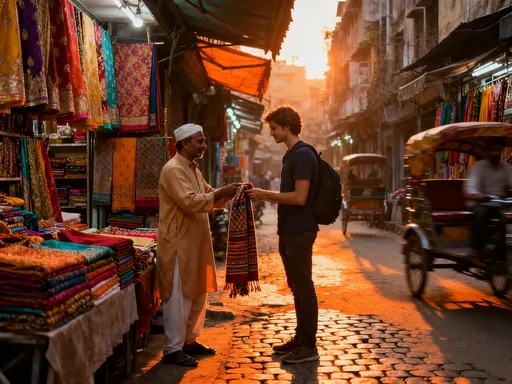
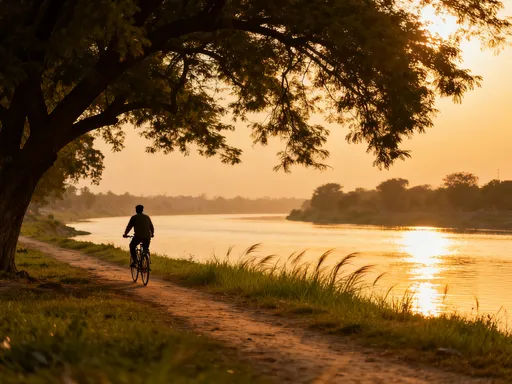
What truly sets Chittagong apart is its authenticity. While other cities cater heavily to visitors, Chittagong remains rooted in daily life. Women in vibrant saris walk to market, fishermen mend nets along the Karnafuli River, and rickshaws weave through narrow lanes with a rhythm unchanged by time. These are not staged scenes but genuine slices of existence, perfect for candid photography. The absence of overwhelming tourism means moments unfold naturally, offering photographers the rare chance to capture life as it truly is. There’s poetry in the way laundry flutters from balconies, children play in alleyways, and temple bells echo across misty mornings.
For landscape and street photographers alike, Chittagong delivers variety within a compact radius. One moment you’re atop a hill watching clouds drift over treetops, the next you’re in a bustling bazaar where colors explode in every direction. The city’s energy is palpable but not intrusive, making it easy to move through spaces with a sense of discovery. Whether you’re drawn to stillness or motion, light or shadow, Chittagong provides the canvas. It’s a place where the ordinary becomes extraordinary through the lens, where a simple staircase can frame a sunrise, and a quiet park bench offers a window into the soul of a community.
Foy’s Lake: Serenity Reflected in Every Shot
Foy’s Lake is more than a recreational spot—it’s a sanctuary for visual storytelling. Created in the 1920s and named after a British civil engineer, this man-made lake has evolved into one of Chittagong’s most photogenic landmarks. The water, often still in the early hours, acts like a mirror, doubling the beauty of the surrounding hills and lush vegetation. At dawn, when a soft mist hovers above the surface, the lake transforms into a dreamscape. Photographers who arrive before sunrise are rewarded with an ethereal glow, where the boundary between sky and water blurs into a seamless gradient of pastel hues.
One of the most compelling techniques to use here is long exposure. With a tripod and a slow shutter speed, the ripples on the lake can be smoothed into glassy perfection, enhancing the sense of calm. This method works especially well when capturing the reflection of trees, birds in flight, or the distant silhouette of the city skyline. Even without advanced gear, smartphone users can take advantage of night mode settings to achieve similar effects. The key is patience—waiting for the right moment when a kingfisher dives, a paddleboat glides by, or a fisherman casts his net, creating a ripple that breaks the mirror just enough to add narrative depth.
The walking trails around Foy’s Lake offer multiple angles for composition. Elevated viewpoints along the perimeter allow for layered shots—foreground foliage, mid-level water, and background hills—all in a single frame. Benches and shaded gazebos provide natural leading lines, while overhanging branches frame the lake like a living picture window. During golden hour, the western side of the lake catches the last light, turning the water into liquid gold. Evening visits are equally rewarding, as string lights along the promenade flicker to life, casting warm reflections that dance with the stars.
Foy’s Lake is also a place of gentle human activity. Families gather for picnics, couples stroll hand in hand, and children chase bubbles in the park. These moments, though simple, carry emotional weight. A mother adjusting her child’s hat, an elderly couple feeding pigeons, or a group of friends laughing on a paddleboat—each scene tells a quiet story. The challenge and joy of photographing here lie in capturing these interactions without intrusion. Using a telephoto lens or discreet positioning allows you to document life as it unfolds, preserving authenticity without disruption.
Batali Hill: Dawn Breaks Over the City’s Crown
For those willing to rise before the sun, Batali Hill offers one of Chittagong’s most breathtaking rewards. This modest but steep hill, located in the heart of the city, serves as a natural observatory. The climb is short but winding, passing through patches of greenery and occasional staircases that lead upward like a quiet pilgrimage. As you ascend, the city slowly reveals itself—rooftops stacked like terraces, roads snaking through valleys, and the first light creeping over the eastern horizon. By the time you reach the top, the world below is still half-asleep, wrapped in a soft blanket of mist.
The panoramic view from Batali Hill is nothing short of cinematic. To the north, the hills roll into the distance like waves frozen in time. To the south, the Karnafuli River glistens faintly, catching the first rays of sunlight. Temple spires and minarets rise above the rooftops, their silhouettes sharp against the brightening sky. This is the moment when Chittagong feels both vast and intimate—a city of contrasts where spirituality and urban life coexist. Photographers often find themselves pausing not just to adjust settings, but to simply breathe in the stillness. There’s a quiet reverence in the air, a sense that you’re witnessing something sacred.
For optimal results, arriving 30 to 45 minutes before sunrise is ideal. This allows time to scout the best spots, set up equipment, and adapt to the changing light. A wide-angle lens captures the full sweep of the city, while a telephoto lens can isolate distant details—smoke rising from a morning kitchen, a lone cyclist on a ridge, or birds circling above a temple. Camera settings should start with a low ISO (100–200) to minimize noise, a moderate aperture (f/8 to f/11) for depth of field, and a shutter speed adjusted to the available light. As the sun rises, bracketing exposures ensures you capture both shadow and highlight details.
Safety and respect are important when visiting Batali Hill. The path is generally safe, but wearing sturdy shoes and carrying a flashlight is advisable. It’s also wise to be mindful of local residents and any small shrines or prayer areas along the way. This is not just a photo spot but a place of personal significance for many. By moving quietly and photographing with care, visitors honor the space and its community. The experience becomes more than visual—it becomes emotional, a quiet communion with the city at its most vulnerable hour.
Ethereal Light at Shah Amanat Bridge
As day turns to night, Chittagong reveals a different kind of beauty—one defined by steel, light, and motion. The Shah Amanat Bridge, a modern engineering marvel spanning the Karnafuli River, becomes a stage for urban photography after dark. Its LED-lit cables rise like glowing harp strings against the night sky, while streams of headlights and taillights streak across the roadway in vibrant red and white trails. From a distance, the bridge looks like a constellation fallen to earth, connecting two halves of the city with both function and flair.
Photographing the bridge requires preparation, especially for long exposures. A tripod is essential to keep the camera steady during slow shutter speeds, which can range from 10 to 30 seconds depending on traffic flow. Using manual focus ensures clarity, particularly when capturing the sharp lines of the bridge’s structure against the softer glow of city lights. The best vantage points are along the riverbanks on either side, where you can include reflections in the water. When the river is calm, these reflections double the impact, creating symmetry that draws the eye deep into the frame.
The interplay of elements—moving vehicles, static architecture, water, and sky—offers endless compositional possibilities. Framing the shot to include a portion of the riverbank adds context, while using a polarizing filter can reduce glare and enhance color saturation. For those with drones, the aerial view is spectacular, though local regulations should always be checked before flight. Even without a drone, a telephoto lens can compress the scene, bringing distant lights closer and emphasizing patterns in the traffic flow.
What makes the Shah Amanat Bridge compelling is not just its visual drama but what it represents—a city moving forward while still rooted in its geography. The river, once a barrier, is now bridged with light and steel. The contrast between old and new is subtle but powerful. While fishermen still work the waters below, the bridge hums with the energy of commerce and connection. Capturing this duality—the timeless river and the modern span—adds depth to your photography, turning a simple night shot into a narrative about progress, place, and belonging.
In the Heart of the Hills: Zia Memorial & CDA Plaza
For accessible, elevated views without a strenuous hike, the Zia Memorial Complex and nearby CDA Plaza are ideal. Perched on a hilltop, these urban lookouts offer sweeping panoramas of Chittagong’s skyline, especially vibrant during the late afternoon and early evening. The Zia Memorial, dedicated to former President Ziaur Rahman, features a clean, modern design with open spaces and well-maintained gardens. Its elevated platform provides an unobstructed view eastward, where the city cascades down the hills like a living mosaic.
CDA Plaza, just a short walk away, is equally rewarding. Here, the city’s grid layout becomes visible—roads radiating outward, neighborhoods layered by elevation, and the distant glimmer of the Bay of Bengal on clear days. The area is popular with locals, especially in the evenings when families come to enjoy the cool breeze and the view. This makes it an excellent spot for cultural photography, where the landscape and people intersect. A woman adjusting her scarf in the wind, children flying kites, or a couple sharing a quiet moment on a bench—these are the human details that bring a city to life.
Photographically, the challenge at Zia Memorial and CDA Plaza is working with railings and barriers, which are present for safety. However, with a little creativity, these can be used to enhance composition rather than hinder it. Shooting through the railing with a wide aperture (f/2.8 to f/5.6) creates a bokeh effect, blurring the metal into soft shapes while keeping the city in focus. Alternatively, positioning the camera low or high can minimize the railing’s presence. A polarizing filter helps reduce reflections on glass barriers, if present.
Telephoto lenses are particularly useful here for isolating distant elements. You might focus on a ferry navigating the Karnafuli, a temple bell tower catching the last light, or a cluster of hillside homes glowing as lamps are lit. These details, though small in the grand view, carry emotional weight. They remind us that a city is not just a collection of buildings but a network of lives. By zooming in, you capture not just geography but humanity—the quiet moments that define daily existence in Chittagong.
Off the Beaten Path: Hidden Lookouts Locals Know
Beyond the well-trodden spots lie quieter vantage points known primarily to residents. These hidden lookouts are not marked on maps but discovered through wandering—upside streets, around corners, past tea stalls and hillside mosques. One such place is a quiet lane near the eastern slope, where a simple stone bench overlooks a deep valley. In the early morning, fog fills the hollow like cotton, and the first sunlight paints the treetops gold. There are no crowds, no vendors, just the sound of birds and the distant call to prayer.
Another gem is a small mosque on a ridge, accessible via a narrow footpath. The courtyard offers a 180-degree view of the surrounding hills, with prayer mats still laid out from dawn services. Photographing here requires discretion and respect. The focus should be on the environment—the architecture, the light, the landscape—rather than on worshippers. Capturing the empty courtyard with the city spread below creates a powerful image of solitude and spirituality.
These off-the-beaten-path locations thrive on spontaneity. You might stumble upon a roadside tea stall where the owner gestures for you to sit, offering a view of the valley with your drink. Or you might find a cluster of homes built into the hillside, their balconies overflowing with potted plants. These moments are not staged; they are gifts of curiosity and kindness. The key to photographing them is presence—being patient, moving slowly, and engaging with warmth when invited.
Respectful photography is essential. Always ask before taking close-up shots of people, and if in doubt, refrain. A smile, a nod, or a simple gesture can go a long way in building trust. In return, you may be welcomed into a home, offered tea, or shown a secret spot only locals know. These interactions, though brief, enrich the journey far beyond the photograph. They remind us that travel is not just about seeing but about connecting—with places, with people, with the quiet beauty of everyday life.
Chittagong Through the Seasons: When Light Paints the City Differently
The character of Chittagong shifts with the seasons, each bringing its own palette and mood. Winter, from November to February, offers the clearest skies and coolest temperatures. Visibility is at its peak, making it ideal for long-distance shots and crisp cityscapes. The air is dry, the light is soft, and the hills appear sharply defined against the sky. This is the most popular time for visitors, and for good reason—photography conditions are consistently favorable.
The monsoon season, from June to September, transforms the city into a lush, green dreamscape. Rain-washed streets reflect neon signs, and the hills become saturated with color. Humidity creates a natural haze, softening distant views and adding a dreamlike quality to images. While sudden showers can be challenging, they also bring dramatic skies—dark clouds parting to reveal shafts of sunlight, raindrops on lenses creating abstract textures, and puddles turning into instant mirrors. With a rain cover and a sense of adventure, monsoon photography in Chittagong can yield some of the most atmospheric results.
Pre-summer months, March to May, bring intense light and heat. The sun is high and bright, casting strong contrasts and deep shadows. This can be difficult for beginners, but experienced photographers use it to their advantage—shooting in the early morning or late afternoon, using shadows as compositional elements, or embracing the boldness of high-contrast scenes. The city feels more vibrant during this time, with festivals and cultural events adding color and movement to the streets.
Each season tells a different story. Winter speaks of clarity and calm, monsoon of renewal and emotion, and pre-summer of energy and intensity. Choosing when to visit depends on the mood you wish to capture. For soft, serene images, winter is unmatched. For drama and texture, the monsoon delivers. And for bold, vivid storytelling, pre-summer offers unmatched vibrancy. Regardless of season, Chittagong remains a city of light, layers, and life—a place where every photograph is a conversation between the viewer and the viewed.
Framing More Than Views—Chittagong’s Soul
Photographing Chittagong is not just about capturing beautiful scenes; it’s about bearing witness to resilience, harmony, and quiet beauty. Every hilltop, every reflection, every candid moment on a street corner tells a story of a city that endures, adapts, and thrives. The images we take are not merely records of place but reflections of connection—between people and land, past and present, stillness and motion. In a world that often feels rushed and artificial, Chittagong offers authenticity, depth, and soul.
As you frame your shots, remember that the most powerful photographs are not always the most technically perfect. Sometimes, it’s the slightly blurred image of a child running toward the sea, the quiet silhouette of a fisherman at dusk, or the way light falls on a temple roof after rain. These are the moments that stay with you, that echo in memory long after the camera is put away. They remind us that travel is not about collecting destinations but about experiencing presence.
So come to Chittagong with your lens ready, but also with your heart open. Let the hills guide your steps, the river calm your thoughts, and the people inspire your vision. Seek not just the perfect shot, but the meaningful moment. In doing so, you won’t just capture the city—you’ll carry a piece of it with you, long after you’ve left its winding roads and misty mornings behind.