You Won’t Believe What’s Hiding in Port Louis’ Streets
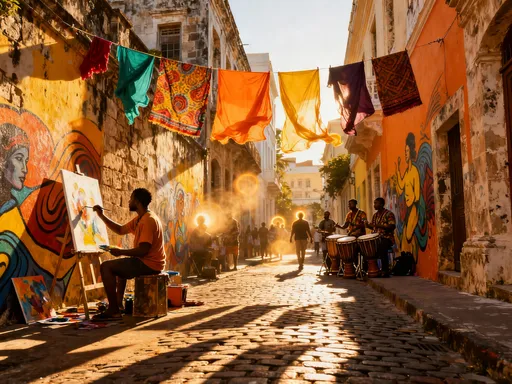
I walked into Port Louis expecting a typical capital city—traffic, government buildings, maybe a market. What I found blew my mind: vibrant murals wrapping colonial walls, drumbeats echoing from hidden courtyards, and artists turning alleys into open-air galleries. This isn’t just Mauritius’ political hub—it’s a cultural heartbeat. If you think island culture stops at beaches, think again. Port Louis is going viral, and here’s why its art and soul are impossible to ignore.
First Impressions: Beyond the Postcard
Most travelers arrive in Mauritius with visions of turquoise lagoons and palm-fringed resorts, often bypassing Port Louis entirely. They assume the capital is just an administrative center, a functional stopover between flights or ferry rides. But this perception overlooks the city’s dynamic essence. Stepping off the bus or car into the heart of the city is like entering a living mosaic—one where colonial history, modern energy, and cultural pride collide in the most beautiful way. The streets hum with activity long before the sun reaches its peak. Hawkers arrange baskets of bright mangoes and fragrant chilies, taxis honk through narrow lanes, and the scent of grilled *dholl puri* rises from roadside stalls. There’s no attempt to sanitize the chaos; instead, it’s embraced as part of the rhythm.
The contrast between Port Louis and the island’s coastal resorts could not be starker. While the beaches offer serenity, the capital offers authenticity. You won’t find manicured promenades or silent luxury here—what you will find is life in full volume. The architecture tells its own story: weathered French-era buildings with shuttered windows stand beside British-influenced arcades and Indian-inspired shopfronts. Many of these structures, once symbols of colonial authority, now serve as canvases for a new generation of artists. The blend isn’t accidental—it’s intentional, a visual conversation between eras, cultures, and identities.
One of the best places to feel this energy is the Caudan Waterfront, a revitalized port area that blends shopping, history, and culture. At first glance, it appears tourist-friendly—glass-fronted cafes, souvenir boutiques, and a modern marina. But look closer. Behind the polished surface, you’ll spot murals depicting sugarcane workers, freedom fighters, and Creole matriarchs. Benches are carved with proverbs in Kreol, and small plaques tell the stories of enslaved Africans who once passed through this very harbor. Even the boardwalk features embedded tiles tracing the routes of indentured laborers from India and China. Caudan is not just a commercial space; it’s a curated narrative of resilience and rebirth. It invites visitors not only to spend but to reflect.
Just beyond Caudan, the city unfolds in layers. Government offices with stern facades hide courtyards where children play dominoes and elders sip *thé à la vanille*. On quiet side streets, pastel-colored homes with wrought-iron balconies reveal hand-painted signs advertising family-run bakeries or tailors. These pockets of calm are interrupted by bursts of color—graffiti-covered walls transformed into cultural landmarks. Port Louis doesn’t try to be perfect. It doesn’t need to. Its beauty lies in its honesty, in the way it wears its history on its skin and lets its people shape its soul.
The Street Art Revolution
In Port Louis, street art is not vandalism—it’s a language. Over the past decade, a quiet but powerful movement has turned neglected walls, shuttered warehouses, and forgotten alleyways into vibrant storytelling spaces. This transformation has been led by local collectives such as *Urbain Mouv’* and *Art on Walls*, groups composed of young Mauritian artists determined to reclaim urban space and celebrate their heritage. Their work is not random or rebellious for rebellion’s sake; each mural is a carefully considered tribute to identity, history, and resistance. The colors are bold, the lines expressive, and the messages deeply rooted in the island’s multicultural fabric.
One of the most striking examples can be found on Albion Street, where a massive mural spans the side of a former textile factory. It depicts a Creole woman in traditional dress, her eyes strong and unflinching, her head wrapped in a *turban foulard*. Behind her, waves morph into the faces of ancestors, blending African, Indian, and Malagasy features. The artwork is titled *Mère de l’Île*—Mother of the Island—and serves as a powerful acknowledgment of the women who held communities together through centuries of change. Nearby, another wall tells the story of Aapravasi Ghat, the UNESCO World Heritage site where over half a million indentured laborers arrived from India between 1834 and 1920. Abstract figures rise from the ground, their hands reaching toward a sun shaped like a lotus, symbolizing both struggle and hope.
In the neighborhood of Roche Bois, street art takes on a more community-driven role. Entire blocks have been transformed through collaboration between artists and residents. Children often watch as painters work, asking questions and sometimes helping with small sections. These murals don’t just depict historical figures—they feature local heroes: teachers, fishermen, market vendors. One wall shows an elderly man playing the *ravanne* drum, surrounded by swirling patterns that echo traditional *caraque* fabric designs. The background shifts from deep indigo to fiery orange, evoking both the sea and the setting sun over the harbor. These works are not meant to be admired from a distance; they are meant to belong, to spark conversation, to remind people of who they are.
The impact of this movement extends beyond aesthetics. In areas once associated with neglect or crime, the presence of art has brought renewed attention and foot traffic. Shop owners report increased business, and some have begun commissioning their own murals. The city government, initially skeptical, now partners with collectives on public art projects, recognizing their role in urban renewal. But the artists remain cautious. They emphasize that their mission is not gentrification but preservation—of culture, memory, and community voice. When you walk through these painted alleys, you’re not just seeing art. You’re witnessing a reclamation of space, one brushstroke at a time.
Cultural Crossroads at the Central Market
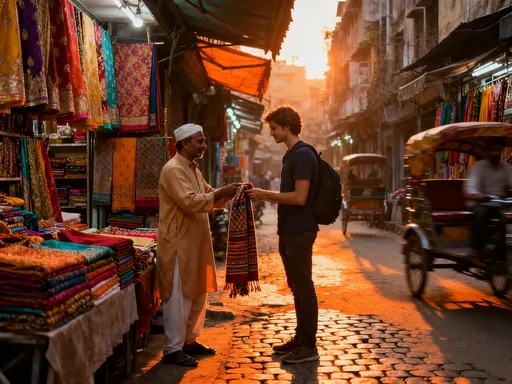
No visit to Port Louis is complete without a walk through the Central Market, a sprawling complex of covered halls and open-air stalls that has served as the city’s commercial and cultural heart for over a century. More than just a place to buy souvenirs, the market is a living archive of Mauritian identity. Here, the island’s diverse roots—African, Indian, Chinese, French, and Malagasy—are not just coexisting; they are woven together in every thread, spice, and melody. The air is thick with scents: sharp turmeric, sweet vanilla, pungent garlic chutney, and the smoky aroma of grilled *samoussas*. Vendors call out in Kreol, Hindi, and French, creating a symphony of languages that reflects the nation’s pluralism.
One of the most fascinating sections is the fabric stalls, where rolls of *caraque* cloth are displayed like treasure. These hand-printed textiles, traditionally worn by Creole women, feature intricate patterns that carry symbolic meanings. A diamond shape might represent resilience; zigzag lines can signify the journey of ancestors. Older women often linger at these stands, guiding younger shoppers and sharing stories about how their grandmothers wore these fabrics during festivals or family ceremonies. Buying a piece of *caraque* here is not a transaction—it’s an act of cultural continuity. Nearby, artisans weave *latani* hats from palm leaves, their fingers moving with practiced ease. These hats, once essential for field workers under the tropical sun, are now symbols of national pride, worn during cultural parades and official events.
The music section of the market is equally revealing. Stalls sell handmade *ravanne* drums, crafted from goat skin stretched over wooden frames. These instruments are central to sega music, the soulful genre born from the experiences of enslaved Africans. Vendors often demonstrate the rhythms, tapping out beats that seem to pulse through the very ground. Other stalls offer *bajour* spices—blends of cumin, fenugreek, and chili used in traditional Creole cooking. A vendor might invite you to smell the mix, then share a recipe passed down from her mother. These interactions are not performative; they are genuine invitations into daily life. Even the way goods are displayed tells a story: baskets woven in Madagascar, tea tins labeled in Chinese characters, incense sticks wrapped in Hindi script. Every object has a history, a journey, a family behind it.
For the visitor, navigating the market can feel overwhelming at first. There are no clear signs, no fixed prices, and no rush to make a sale. But that’s part of its charm. This is not a staged experience for tourists; it’s a real marketplace where locals come to shop, gossip, and connect. To truly appreciate it, slow down. Ask questions. Accept a cup of *sosro*—a sweet, milky tea served in small plastic bags tied at the top. Let the rhythm of the place guide you. In doing so, you’re not just observing culture—you’re participating in it.
Music in the Air: From Sega to Urban Beats
If the streets of Port Louis are the canvas, then music is its soundtrack. From dawn until late into the night, the city pulses with sound. On La Rue Suffren, one of the oldest thoroughfares in the capital, the evening brings a transformation. As the sun dips below the harbor, open doorways begin to glow with warm light, and the deep, resonant beat of the *ravanne* drum fills the air. This is sega music—raw, emotional, and deeply rooted in the island’s history. It began as an expression of sorrow and resistance among enslaved Africans, but over time, it evolved into a celebration of survival, love, and identity. Today, it remains the heartbeat of Mauritian culture, especially in neighborhoods like Line Barracks and Plaine Verte.
On any given night, you might stumble upon an impromptu gathering in a small courtyard—a *case créole* with peeling paint and a corrugated roof. An elder sits on a stool, fingers flying over the drum, while a woman in a flowing *caraque* dress sways barefoot, her movements graceful and grounded. Younger onlookers clap along, some joining in as the tempo builds. There’s no stage, no microphone, no admission fee. This is music as community ritual, passed down orally and physically from one generation to the next. Children learn the steps by watching; teenagers absorb the lyrics, which often speak of love, loss, and the beauty of the island. The call-and-response pattern—a hallmark of sega—creates a sense of unity, as if everyone present is part of the performance.
But the musical landscape of Port Louis is not frozen in tradition. A new wave of artists is blending sega with modern genres, creating a sound that is both familiar and fresh. In underground clubs and cultural centers, DJs mix sega rhythms with hip-hop beats, reggae basslines, and electronic synths. Bands like *Savanne* and *Zouk Machine* have gained regional fame by fusing traditional instruments with contemporary production. Rap battles, often held in community halls, tackle social issues like inequality, education, and identity, all in Kreol. These performances attract diverse crowds—young professionals, students, and elders—proving that music remains a unifying force.
One of the most powerful examples of this fusion is the annual *Sega Night* event, held near the waterfront. Organized by local cultural groups, it brings together traditional drummers, modern dancers, and spoken word artists. The atmosphere is electric. Fire dancers spin in time with the beat, children perform choreographed routines, and elders sit on folding chairs, nodding in approval. The event is not commercialized; it’s community-funded and volunteer-run. It exists not to entertain tourists but to affirm identity. When you stand in the crowd, feeling the vibration of the drums in your chest, you understand that music here is more than entertainment. It is memory. It is resistance. It is joy. And in a world that often feels fragmented, Port Louis reminds us that rhythm can still bring people together.
Hidden Galleries and Creative Hubs
Beyond the streets and markets, Port Louis harbors a more curated side of its artistic spirit. In quiet corners of the city, galleries and studios offer a different kind of cultural encounter—one that is reflective, intentional, and deeply innovative. These spaces are not hidden in the sense of being secretive, but they are often overlooked by casual visitors who stick to the main tourist routes. The *Mauritius Art Gallery*, located in a restored colonial building near the Supreme Court, is one such gem. Its rotating exhibitions feature works by both established and emerging artists, many of whom explore themes of identity, migration, and environmental change.
One recent exhibit, titled *Echoes of the Banyan*, showcased sculptures made from recycled metal, driftwood, and discarded fishing nets. At first glance, the pieces resembled traditional Indian deities, but upon closer inspection, viewers noticed modern elements—wires shaped into halos, bottle caps forming eyes, and rusted chains forming garments. The artist, a third-generation Mauritian of Indian descent, explained that the work was a meditation on how ancestral beliefs adapt in a globalized world. Another exhibit featured digital art that reimagined Creole folklore using animation and augmented reality. Visitors could use tablets to see *loup-garous*—mythical shapeshifters—come to life on the gallery walls, their stories narrated in Kreol. These works prove that Mauritian art is not stuck in the past; it is evolving, questioning, and engaging with the future.
Another important space is *Galerie Line*, a small but influential venue in the heart of the city. Run by a collective of female artists, it focuses on empowering women through creative expression. Exhibits often highlight issues like domestic life, motherhood, and cultural expectations, but with a tone of resilience rather than victimhood. One powerful series depicted women in traditional roles—cooking, sewing, caring for children—but with their hands glowing, symbolizing quiet strength. The gallery also hosts workshops where local women learn painting, printmaking, and textile design. These programs are not just about art; they are about confidence, community, and self-worth.
What makes these galleries significant is their connection to the streets. Many of the artists exhibiting here began as street painters or market artisans. Their work in formal spaces does not reject the raw energy of the alleys; it builds upon it. They bring the same passion, symbolism, and cultural pride into a different context. International curators have begun to take notice. In recent years, Mauritian artists have been invited to biennales in South Africa, France, and Singapore. Yet, despite this growing recognition, most remain deeply rooted in Port Louis. They open their studios to school groups, give talks at community centers, and mentor young creators. For them, success is not measured by fame or sales, but by impact—by how many people feel seen, heard, and inspired.
Why This Is Going Viral (And How to Experience It Right)
It’s no surprise that Port Louis is gaining attention on social media. Instagram feeds are flooded with images of its vibrant murals, bustling market scenes, and nighttime sega performances. Travel bloggers and influencers are sharing reels of artists at work, food vendors stirring giant pots of curry, and children dancing in the streets. This visibility has brought new interest—and new challenges. As more visitors arrive seeking “authentic” experiences, there is a risk of commodification, where culture becomes a performance rather than a lived reality. Some worry that the very things that make Port Louis special could be diluted by overcrowding, staged photo ops, or exploitative tourism.
But it doesn’t have to be this way. With mindful travel practices, visitors can engage with the city in a way that honors rather than exploits its spirit. The first step is to move beyond the surface. Instead of snapping a quick photo of a mural and moving on, take time to learn its story. Many artists include QR codes or small plaques with explanations. Read them. If possible, attend a guided walking tour led by local residents. Organizations like *Port Louis Heritage Walks* offer tours that focus on cultural history, street art, and community life. These guides are not just narrators; they are storytellers, often sharing personal memories and family histories tied to the places they show.
Another important practice is supporting independent creators. Instead of buying mass-produced souvenirs, seek out artisans selling handmade goods—whether it’s a *latani* hat, a hand-painted fan, or a small canvas from a street artist. Pay fairly, and ask about the process. When you eat, choose family-run *dhabas* or market stalls over chain restaurants. A simple meal of *rougaille* and rice can become a conversation starter, a moment of connection. Avoid asking people to pose for photos unless you’ve spoken to them first and received genuine consent. Culture is not a costume; it is a way of life.
Finally, be present. Put the phone down. Listen to the music. Taste the food. Let the city surprise you. When you approach Port Louis with respect and curiosity, you’re not just visiting—you’re participating in something meaningful. And that, more than any photograph, is what you’ll carry home.
Conclusion: Port Louis Isn’t a Stop—It’s a Revelation
Port Louis does not reveal itself all at once. It unfolds slowly, in fragments—a drumbeat around a corner, a mural hidden behind a fruit stand, a grandmother humming a sega tune as she folds laundry. This is not a city designed for passive observation. It demands engagement, curiosity, and openness. To walk its streets is to witness a culture that has survived, adapted, and thrived through centuries of change. It is a place where history is not locked in museums but lived in homes, markets, and alleyways.
As Mauritius gains global recognition as a travel destination, there is a risk of reducing the island to its beaches and resorts. But Port Louis stands as a powerful counter-narrative. It reminds us that true travel is not about comfort or convenience—it’s about connection. It’s about standing in a crowded market and feeling the weight of a *ravanne* drum in your hands. It’s about understanding that a mural is not just paint on a wall, but a declaration of identity. It’s about realizing that culture is not something you consume; it’s something you experience, with humility and respect.
The city’s growing popularity on social media is not a trend to be chased, but an invitation to look deeper. Behind every viral image is a community, a history, a story waiting to be heard. The artists, musicians, vendors, and elders of Port Louis are not performing for an audience—they are living their truth. And if you come with an open heart, they will let you in.
So the next time you plan a trip to Mauritius, don’t just book a beachfront villa and stay put. Take the short drive into the capital. Walk its streets. Taste its food. Listen to its music. Let Port Louis challenge your expectations and expand your understanding of what island life can be. Because beyond the postcard-perfect shores, there is a heartbeat. And once you’ve felt it, you’ll never see Mauritius the same way again.