This Is Why Gothenburg’s Shopping Streets Are Pure Instagram Gold
You know that feeling when a city just gets style? Gothenburg hits different. I didn’t expect much—honestly—but the commercial streets here? Absolutely stunning. Every corner feels like a curated feed waiting to happen: pastel buildings, boutique windows, cobblestone charm. It’s not just shopping; it’s a visual journey. If you’re chasing that perfect shot or just love wandering beautiful streets, Gothenburg’s downtown scene will blow you away. Let me show you why.
The Vibe of Gothenburg’s City Center
Walking through Gothenburg’s city center is like stepping into a well-edited lifestyle magazine—calm, composed, and full of quiet elegance. Unlike bustling metropolises where energy feels overwhelming, Gothenburg moves at a thoughtful pace. The streets are clean, the air is fresh, and there’s a sense of order that enhances rather than detracts from beauty. This is a city that values function without sacrificing form, where design is not an afterthought but a guiding principle.
The heart of the city blends Nordic minimalism with subtle European sophistication. Wide avenues meet intimate lanes, and modern glass facades stand beside 19th-century brick buildings painted in soft grays, creams, and muted pinks. The result is a visual harmony that feels both intentional and effortless. You don’t need to search for beauty here—it reveals itself naturally, in the curve of a wrought-iron balcony or the way sunlight filters through leafy canopies onto pavement.
What makes Gothenburg especially appealing for photography is how its layout invites exploration. The downtown area is compact and walkable, designed to encourage pedestrians to linger. There are no jarring transitions or chaotic intersections—just smooth flows between districts. Whether you're drifting from one boutique to another or pausing to admire a floral display in a window box, the city supports a slow, mindful kind of wandering.
Key commercial zones like Nordstan, Kungsportsavenyn, and Linnégatan serve as natural anchors for both shopping and sightseeing. Each has its own rhythm and aesthetic, yet they’re all connected by a shared commitment to quality design and public comfort. Benches are plentiful, signage is clear but understated, and greenery is woven into the urban fabric. These aren’t just places to buy things—they’re environments crafted for enjoyment, where even a casual stroll becomes an aesthetic experience.
Kungsportsavenyn: Where Grandeur Meets Street Style
If Gothenburg had a fashion runway, it would be Kungsportsavenyn—affectionately known as Avenyn. Stretching over half a kilometer from Kungsportsplatsen to Götaplatsen, this grand boulevard is the city’s cultural and visual spine. With wide sidewalks, stately trees, and a procession of elegant buildings, it offers a rare blend of urban scale and human warmth. Avenyn isn’t just for show; it’s where locals gather, artists perform, and fashion trends quietly emerge.
The architecture along Avenyn is a masterclass in contrast. You’ll find ornate 19th-century facades with gilded details standing shoulder to shoulder with sleek, contemporary storefronts. The result is a streetscape that feels layered and alive, where every glance reveals a new detail—a carved lion’s head above a doorway, a minimalist logo etched into black metal, a flower arrangement spilling from a second-floor balcony. This mix of old and new creates endless opportunities for dynamic compositions in photography.
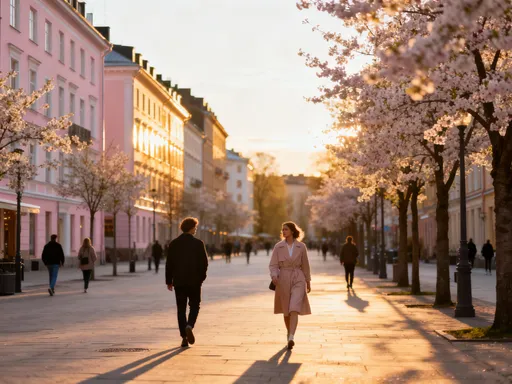
What truly elevates Avenyn’s Instagram appeal, however, is how it transforms with the seasons. In spring, cherry blossoms burst into delicate pink clouds above the promenade, drawing crowds eager to capture the fleeting beauty. Summer brings long daylight hours and outdoor café seating, where linen-clad diners sip coffee beneath striped awnings. Autumn paints the trees in gold and rust, while winter drapes the avenue in soft white snow and twinkling holiday lights.
For the best photo opportunities, timing is key. Early morning—between 7:00 and 9:00 a.m.—offers soft, even light and minimal foot traffic. This is when the boulevard feels most serene, allowing you to frame wide shots without distractions. Late afternoon, just before golden hour, is ideal for portraits against warm stone walls or reflective shop windows. Weekdays are generally less crowded than weekends, especially during midweek mornings when the city wakes up at a relaxed pace. Whether you’re shooting architecture, street fashion, or candid moments, Avenyn rewards patience and presence.
Nordstan & Mall of Scandinavia: Fashion with a Photogenic Edge
When it comes to indoor shopping, Gothenburg doesn’t settle for generic malls. Nordstan, one of Scandinavia’s largest city-center shopping complexes, is a prime example of how retail spaces can be both functional and beautiful. Connected directly to the central train station, it serves as a major transit hub, yet it never feels rushed or utilitarian. Instead, its spacious halls are flooded with natural light, thanks to a series of skylights that stretch across the ceiling like a glass spine.
The interior design emphasizes openness and flow. White marble floors reflect ambient light, while clean-lined railings and minimalist signage maintain a sense of order. Stores are arranged with care, and the common areas are treated as extensions of the city’s public realm. Art installations—ranging from abstract sculptures to digital displays—add visual interest without overwhelming the space. Even the seating areas, with their Scandinavian-style wooden benches and potted plants, feel intentional and inviting.
What makes Nordstan particularly photogenic is how it blends commerce with culture. The lighting is consistently flattering, making it a favorite for influencers shooting outfit photos between errands. Glass-walled cafes with marble counters and hanging pendant lights offer perfect backdrops for flat lays featuring coffee cups, leather totes, and delicate pastries. Because the mall is so well integrated into daily life, it never feels staged—just naturally stylish.
Just a short train ride outside the city center lies Mall of Scandinavia, a striking example of contemporary Scandinavian architecture. Located in Solna, near Stockholm but often included in broader regional shopping itineraries, this mall is worth mentioning for its bold design language. Its exterior features sweeping curves and reflective glass panels, while the interior boasts high ceilings, cascading staircases, and an abundance of greenery. The central atrium, with its living plant walls and skylit dome, feels more like a botanical garden than a shopping center.
While Mall of Scandinavia is larger and more modern than Nordstan, it shares the same philosophy: beauty in simplicity, elegance in function. The common areas are designed to be experienced, not just passed through. Wide corridors, art installations, and curated lighting make every corner feel like a potential photo op. Even the restrooms—spacious, spotless, and thoughtfully designed—are frequently praised for their aesthetic quality. For travelers who appreciate architecture as much as shopping, both malls offer a refined, visually rich experience that goes far beyond retail.
Linné & Haga: Charming Streets with Local Flair
While Avenyn and Nordstan capture the city’s grandeur, Linnégatan and the nearby Haga district reveal Gothenburg’s more intimate side. These neighborhoods are where personal style meets local tradition, and where shopping feels less like a transaction and more like a discovery. Linnégatan, in particular, has become a destination for those seeking independent boutiques, artisanal goods, and that elusive ‘Scandinavian chic’ in its most authentic form.
Walking down Linnégatan is like flipping through the pages of a curated lookbook. The street is lined with narrow, two- and three-story buildings painted in soft pastels—dusty rose, sage green, pale gray—many adorned with wooden shutters and overflowing flower boxes. The shop windows are small but meticulously styled, featuring handcrafted jewelry, linen clothing, ceramic vases, and vintage books. There’s no fast fashion here; instead, the focus is on quality, craftsmanship, and timeless design.
What makes Linnégatan so Instagram-worthy is its consistency. The streetscape feels cohesive, as if every business owner has agreed on a shared aesthetic language. Even the signage is understated—often hand-painted or etched into glass—with no neon or plastic to disrupt the calm. This uniformity doesn’t feel forced; it reflects a genuine cultural preference for simplicity and restraint. For photographers, it means you can walk for blocks and find endless variations on the same elegant theme.
Just a short walk away, the historic district of Haga offers a different kind of charm. Known for its well-preserved wooden houses dating back to the 18th and 19th centuries, Haga feels like a village nestled within the city. The cobblestone streets slope gently upward, flanked by cafés, antique shops, and cozy tea rooms. The architecture here is warm and inviting—dark timber frames, white clapboard walls, and flower-filled window boxes that bloom in summer and sparkle with frost in winter.
Haga’s appeal lies in its authenticity. While it’s a popular destination for visitors, it remains deeply rooted in local life. Residents walk their dogs along the lanes, children play near the fountains, and elderly couples sip coffee at sidewalk tables. This lived-in quality makes it especially compelling for storytelling photography. You’re not just capturing buildings—you’re documenting a way of life. The contrast between Haga’s rustic warmth and Linné’s polished minimalism shows the range of Gothenburg’s aesthetic identity, proving that beauty here isn’t monolithic, but multifaceted.
Café Culture as a Visual Experience
In Gothenburg, coffee is more than a drink—it’s a ritual, a design statement, and a key ingredient in the city’s visual culture. The city’s café scene is deeply intertwined with its reputation for style, offering spaces that are as photogenic as they are welcoming. From minimalist espresso bars to cozy heritage buildings turned bakeries, every coffee stop feels like a carefully composed scene waiting to be shared.
Take a typical café in Linné or Haga: exposed brick walls, dark wood floors, marble countertops, and shelves lined with handmade ceramics. Hanging pendant lights cast a warm glow, while large windows let in natural light, illuminating potted plants and fresh flower arrangements. The baristas wear aprons in neutral tones, and the menu is printed on chalkboard or recycled paper. Even the milk is served in glass bottles. Every detail, down to the sugar cubes, feels intentional.
For content creators, these spaces are gold. A flat lay of a cinnamon bun beside a steaming cup of coffee, a napkin with the café’s logo, and a pair of leather gloves makes for a quintessential Nordic lifestyle shot. The color palette—creams, browns, greens, and soft blacks—is inherently harmonious. The textures—rough linen, smooth porcelain, flaky pastry—add depth and tactile appeal. And because the design is so consistent across venues, your feed maintains a cohesive look even if you visit multiple locations.
But beyond aesthetics, the café culture encourages slowness—a quality that enhances both the experience and the photography. Unlike grab-and-go spots, Gothenburg’s cafés invite you to stay. You order a flat white or a traditional kaffe, find a corner table, and watch the world go by. This pause creates space for observation, for noticing the way light moves across a wall, or how a couple shares a slice of cake. Some of the most authentic travel photos come not from posed shots, but from these quiet, unscripted moments.
Pairing a coffee break with street photography is one of the most effective ways to capture Gothenburg’s rhythm. While you wait for your drink, scan the sidewalk: a woman in a wool coat adjusts her scarf, a dog sniffs a flower box, a cyclist glides past on a vintage-style bike. These are the fleeting, human details that bring a destination to life. And because the surroundings are so visually rich, even a simple moment becomes elevated.
Light, Seasons, and the Perfect Shot
One of Gothenburg’s greatest assets for photography is its light. The city lies at a northern latitude, where daylight behaves differently than in sun-drenched southern regions. The sun travels low across the sky, especially in winter, casting long, soft shadows and bathing buildings in a gentle, diffused glow. This is the famed Nordic light—cool yet luminous, crisp yet forgiving—that photographers and artists have celebrated for generations.
Golden hour in Gothenburg is particularly magical. During late spring and summer, the sun sets around 9:30 or 10:00 p.m., stretching golden hour into nearly two hours of perfect shooting time. The pale stone and glass facades along Avenyn glow in warm amber tones, while tree canopies filter the light into dappled patterns on the ground. Reflections in shop windows become painterly, and skin tones appear radiant. This extended twilight allows for relaxed, unhurried photography without the pressure of fading light.
Winter, though darker, offers its own photographic advantages. The air is often clear and crisp, reducing haze and enhancing contrast. Snow-covered streets reflect light upward, softening shadows and brightening scenes. When the holiday lights come on—usually from late November through January—the city takes on a dreamlike quality. Strings of bulbs crisscross Avenyn, illuminating the trees like constellations, while café windows glow like lanterns. These conditions are ideal for long-exposure shots and atmospheric night photography.
To make the most of Gothenburg’s light, timing and planning are essential. Mornings generally offer the clearest skies and fewest people, especially in winter when daylight is shortest. Overcast days, often seen as a challenge, can actually be beneficial—clouds act as a giant softbox, eliminating harsh highlights and creating even illumination. This is especially useful for portrait photography or shooting reflective surfaces like glass and metal.
For those using smartphones or mirrorless cameras, it’s wise to adjust for the cool color temperature of northern light. A slight warmth adjustment in editing can enhance the coziness of a scene without losing authenticity. Polarizing filters can help reduce glare on wet cobblestones or shop windows after rain. And because weather can shift quickly, dressing in layers and carrying a compact umbrella ensures you can stay out longer, waiting for that perfect moment when the light, the subject, and the mood align.
How to Experience It Like a Local (Not Just a Tourist)
The most rewarding way to explore Gothenburg’s shopping streets is to move like someone who belongs. This doesn’t mean dressing in designer clothes or speaking Swedish—it’s about adopting a mindset of quiet appreciation. Locals don’t rush through Avenyn or snap frantic selfies in Haga. They window shop slowly, pause for coffee without checking their phones, and wear practical yet stylish clothing that blends in with the city’s aesthetic.
One subtle but effective way to blend in is to dress the part. Think neutral tones, quality fabrics, and layered pieces—wool coats, leather boots, knit scarves. Even if you’re just walking, wearing clothes that respect the environment enhances your connection to the place. It also makes for more authentic photos, where you look like part of the scene rather than a visitor passing through.
Another local habit is respecting public space. Gothenburgers value order and cleanliness, so littering or loud behavior stands out. Keep your voice down, dispose of coffee cups properly, and avoid blocking sidewalks for photos. If you want a clear shot, wait for a natural lull rather than asking people to move. This respectful approach not only aligns with local norms but often results in more genuine, unposed images.
Finally, embrace the idea that beauty here isn’t staged—it’s lived. The flower boxes aren’t for Instagram; they’re a tradition. The clean streets aren’t for tourists; they’re a point of civic pride. The elegant shop displays aren’t curated for content; they reflect a daily commitment to quality and care. When you photograph Gothenburg, you’re not capturing a performance—you’re witnessing a culture of intentionality.
This is what makes the city’s shopping streets truly special. They’re not designed to be photographed; they’re designed to be lived in. And because that authenticity shines through, every image you take carries a quiet truth. So take your time. Sip your coffee. Let the light guide you. And when you share your photos, you’re not just showing a beautiful place—you’re honoring a way of life.