You Won’t Believe What I Saw in Battambang’s Hidden Corners
Battambang, Cambodia, isn’t just another stop on the backpacker trail—it’s a place where quiet streets hide jaw-dropping views most travelers never see. I stumbled upon viewpoints that left me speechless: misty rice fields at dawn, ancient temples peeking through jungle canopies, and river sunsets painted in gold. This isn’t the typical tourist route. It’s real, raw, and absolutely breathtaking. If you’re after moments that feel truly yours, Battambang delivers in ways you never expected. Away from the crowds and commercial hubs, this riverside city offers a slower, more intimate way to experience Cambodia—one where beauty reveals itself in quiet glances and unhurried walks. Here, travel becomes not just sightseeing, but a deeper kind of seeing.
Why Battambang Stands Apart from Typical Cambodian Destinations
Cambodia draws millions each year with the magnetic pull of Angkor Wat in Siem Reap and the bustling energy of Phnom Penh, the capital. These destinations are undeniably impressive—Siem Reap’s temple complex stands as one of the world’s greatest archaeological wonders, while Phnom Penh pulses with history, culture, and urban life. Yet for all their grandeur, they come with packed pathways, tour groups, and a sense of being constantly observed. Battambang offers a different rhythm. Nestled along the banks of the Sangker River in northwestern Cambodia, it remains one of the country’s best-kept secrets, drawing far fewer international visitors and preserving a sense of authenticity that is increasingly rare.
What makes Battambang unique is not just its lower profile, but the atmosphere it cultivates. The city’s French colonial architecture—pastel-colored buildings with shuttered windows and wrought-iron balconies—lends it a timeless elegance. Tree-lined streets are often quiet, with cyclos (bicycle rickshaws) and motorbikes gliding past local markets and family-run cafés. There’s no rush, no pressure to perform, no need to check off a list. Instead, time unfolds gently, inviting travelers to linger, observe, and connect. This calm environment becomes a gateway to experiences that feel personal and unscripted.
The absence of large tourist crowds means moments of solitude are not just possible—they’re common. You can stand at a riverside viewpoint without jostling for space, watch a farmer guide water buffalo through a field without a dozen cameras pointed at the same scene, or wander through a centuries-old temple without hearing tour guides recite facts in multiple languages. These quiet interactions foster a deeper appreciation for daily life in rural Cambodia. Battambang doesn’t offer spectacle for spectacle’s sake; it offers presence. And in a world where travel often feels transactional, that presence is a rare gift.
The Magic of Sunrise Over the Samlot Area
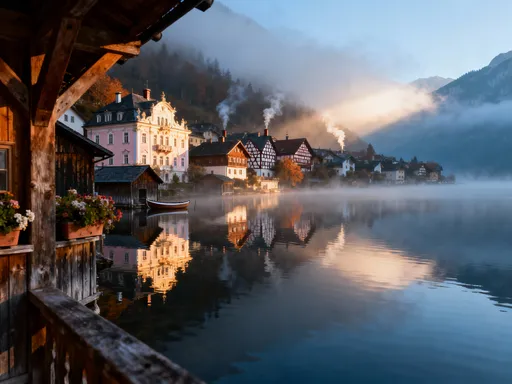
One of the most unforgettable experiences in the Battambang region is witnessing sunrise over the Samlot area, a stretch of countryside marked by rolling hills, dense vegetation, and expansive rice paddies. Reaching this remote landscape requires an early start—typically a 45-minute to one-hour drive from the city center along winding rural roads. But for those willing to rise before dawn, the journey is rewarded with a scene of profound stillness and natural beauty. As the first light breaks over the horizon, the world seems to awaken in slow motion, cloaked in a soft silver mist that hovers just above the flooded fields.
The visual impact is immediate. Golden streaks of light stretch across the sky, reflecting off the waterlogged paddies and creating a mirror effect that blurs the line between earth and sky. In the distance, farmers in conical hats move quietly through the fields, their silhouettes stark against the glowing backdrop. The sound of birdsong rises gradually, accompanied by the distant lowing of cattle and the gentle rustle of palm leaves in the morning breeze. There are no announcements, no crowds, no photo ops orchestrated for tourists—just the organic rhythm of rural life beginning anew.
What sets this experience apart is the combination of timing and silence. Arriving at dawn ensures you witness the landscape in its most tranquil state, untouched by the heat and activity of midday. The cool air carries a freshness that sharpens the senses, making every detail—the glisten of dew on rice stalks, the texture of mud paths, the faint trail of smoke from a village kitchen—feel vivid and immediate. This is immersion at its purest, a reminder that some of the most powerful travel moments come not from grand monuments, but from simply being present in a place at the right moment.
For travelers seeking connection over convenience, the Samlot sunrise offers a rare opportunity to step outside the routine of modern life and into a world governed by natural cycles. It’s not an attraction with opening hours or admission fees. It’s a daily occurrence, free and open to anyone who values stillness and beauty. And in that simplicity lies its magic.
Phnom Sampov: More Than Just a Killing Cave
Phnom Sampov, a limestone hill located just a few kilometers south of Battambang city, holds a complex place in Cambodia’s history. It is widely known for its association with the Khmer Rouge era, particularly the site of the so-called Killing Cave, where thousands of lives were tragically lost. While this history is an important part of the site’s identity, Phnom Sampov offers much more than somber remembrance. Today, it stands as a place of reflection, resilience, and unexpected beauty. Visitors who climb its winding paths are rewarded not only with historical insight but also with one of the most breathtaking panoramic views in the region.
The ascent to the summit is gentle, lined with small shrines, Buddhist statues, and clusters of incense burners tended by locals. As you rise, the view expands gradually—the Sangker River snakes through the landscape below, its surface shimmering under the sun, while patches of emerald rice fields stretch into the distance. From the top, the entire Battambang countryside unfolds like a living map, framed by distant hills and dotted with palm trees and village rooftops. The contrast between the peaceful scenery and the site’s past is striking, yet not jarring. Instead, it invites contemplation, allowing visitors to honor history without being overwhelmed by it.
Modern Cambodia has chosen to preserve Phnom Sampov as a place of memory and healing. The Killing Cave remains respectfully marked, with informational signs explaining its significance, but the focus is not on graphic detail. Rather, the site emphasizes remembrance and reconciliation. Nearby, a large stupa contains the remains of victims, and a golden Buddha statue sits in serene meditation, symbolizing hope and renewal. This balance between remembrance and restoration makes Phnom Sampov a uniquely powerful destination—one that acknowledges pain while affirming life.
For many visitors, the panoramic view from the top becomes a metaphor for perspective. Just as the landscape reveals its full beauty only from a higher vantage point, so too can understanding come with time and distance. Standing at Phnom Sampov, one gains not only a visual feast but also a deeper appreciation for Cambodia’s strength and spirit. It’s a reminder that even in places marked by sorrow, beauty and peace can take root.
Hidden Temples with Unfiltered Views: Banteay Samre and Beyond
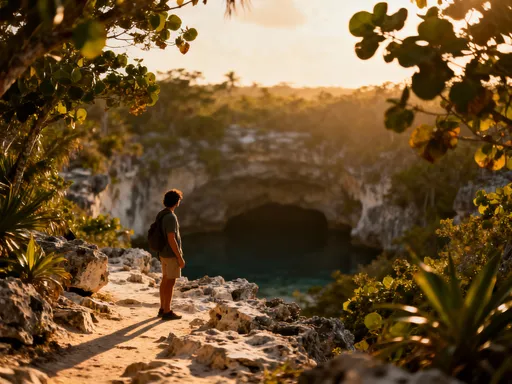
While Angkor Wat dominates the imagination of most travelers to Cambodia, the countryside surrounding Battambang is dotted with lesser-known temple sites that offer a quieter, more personal experience of the country’s ancient heritage. One such place is Banteay Samre, a small but striking temple complex nestled in the forested outskirts of the province. Unlike its famous counterpart near Siem Reap, Banteay Samre sees only a handful of visitors each day, allowing for a sense of discovery that is increasingly rare in Cambodian tourism. Here, there are no tour buses, no loudspeakers, no ropes keeping you at a distance—just moss-covered stones, weathered carvings, and the quiet hum of nature reclaiming its space.
Walking through these hidden temples feels like stepping into a forgotten world. The paths are uneven, the steps worn smooth by centuries of rain and foot traffic. Vines curl around stone lintels, and tree roots wrap around ancient walls like protective arms. Climbing to the upper levels often rewards visitors with sweeping views of the surrounding countryside—endless green fields, distant hills, and the occasional glint of a temple spire through the trees. These vistas are not framed by fences or ticket booths; they are earned through exploration, making them feel more meaningful.
What makes these sites so special is the sense of solitude they offer. You might find yourself the only person at the temple for an entire morning, free to sit in quiet contemplation, trace the patterns of ancient bas-reliefs, or simply listen to the wind moving through the trees. This kind of solitude fosters a deeper connection—not just to the architecture, but to the land and the people who once built and lived among these structures. It’s a humbling experience, one that shifts the focus from sightseeing to reverence.
Exploring these hidden temples also highlights the richness of Cambodia’s cultural landscape beyond the Angkor circuit. They remind us that history is not confined to famous landmarks, but lives in quiet corners, waiting to be noticed. For travelers willing to venture off the beaten path, these sites offer not just beauty, but a sense of intimacy with the past—one that feels authentic, uncurated, and deeply moving.
Riding the Bamboo Train for a Unique Perspective
One of the most distinctive ways to experience the Battambang countryside is aboard the nora, commonly known as the bamboo train. This simple yet ingenious mode of transport consists of a bamboo platform mounted on steel wheels, powered by a small motor. Originally created out of necessity during times of limited infrastructure, the bamboo train has become a beloved local attraction, offering visitors a one-of-a-kind journey through rural Cambodia. More than just a novelty, it provides a perspective on the landscape that is impossible to achieve from a car or bicycle.
The ride typically begins just outside Battambang city and travels several kilometers along an old railway line, now mostly decommissioned. As the train clatters forward, the scenery unfolds in a continuous, unfolding tapestry. Flooded rice paddies glisten under the sun, herons and egrets wade through shallow waters, and farmers pause their work to wave as the train passes. The low elevation of the bamboo platform brings you almost level with the fields, creating an immersive sense of being part of the landscape rather than merely observing it. The rhythmic clatter of the wheels, the breeze on your face, and the scent of wet earth all contribute to an experience that is as sensory as it is scenic.
What makes the bamboo train especially memorable is its simplicity. There are no seats, no schedules, no announcements—just an open platform where you can stand, sit, or crouch as you please. At certain points, the train stops to allow passengers to explore nearby villages, visit small shrines, or take photographs. Occasionally, if another train is coming from the opposite direction, one will be dismantled briefly to let the other pass—a charming reminder of the improvisational spirit that defines much of rural life in Cambodia.
For families and older travelers, the bamboo train offers a gentle adventure that is both accessible and engaging. It’s a chance to slow down, to notice details—the way sunlight filters through banana leaves, the laughter of children playing near a canal, the colorful sarongs drying on clotheslines. In a world where travel often prioritizes speed and efficiency, the bamboo train is a refreshing counterpoint, reminding us that sometimes the journey itself is the destination.
Sunset by the Sangker River: A Local Favorite
As the day winds down, the banks of the Sangker River come alive with a quiet, everyday magic. Locals gather to stroll, cycle, or simply sit on the grassy embankment, watching the sky transform into a canvas of gold, pink, and deep orange. Street vendors fire up their grills, sending curls of fragrant smoke into the air—grilled fish, skewered meat, and sweet pancakes sizzle as families settle in for evening snacks. This is not a staged performance for tourists; it’s a genuine moment of community life, one that unfolds naturally every evening.
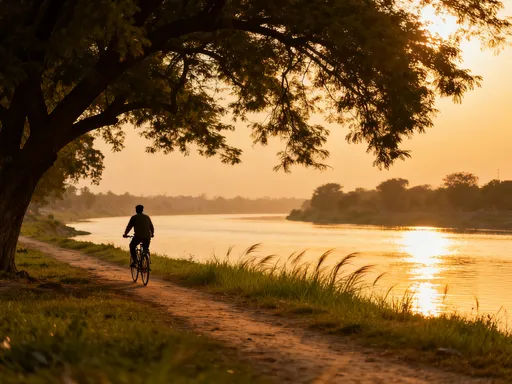
Walking or cycling along the riverpath during sunset offers one of the most peaceful experiences in Battambang. The wooden houses that line the opposite bank glow warmly in the fading light, their reflections dancing on the water’s surface. Children splash at the river’s edge, couples share quiet conversations, and elderly residents sip tea under shaded awnings. The atmosphere is relaxed, unhurried, and deeply welcoming. There’s no pressure to capture the perfect photo or follow a guided route—just the simple pleasure of being present in a place where life moves at a human pace.
For visitors, participating in this daily ritual is a form of cultural connection. Buying a snack from a local vendor, smiling at a passing child, or pausing to watch a fisherman cast his net—these small interactions create memories that last far longer than any sightseeing checklist. The sunset along the Sangker River is not just a visual spectacle; it’s a moment of shared humanity, a reminder that the heart of travel lies in connection, not conquest.
Unlike more commercialized sunset spots in other destinations, this riverside scene remains refreshingly unspoiled. There are no loudspeakers, no souvenir stalls, no entrance fees—just open space, natural beauty, and the gentle rhythm of local life. It’s a rare example of tourism and community coexisting in harmony, where visitors are not intruders, but quiet observers welcomed into the flow of daily existence.
How to Plan Your Own Off-the-Beaten-Path Viewing Journey
Planning a trip to Battambang with a focus on authentic viewing experiences begins with timing. The best months to visit are from November to February, when the weather is cooler, the skies are clear, and the rice fields are either lush and green or golden and ready for harvest. During this period, visibility is optimal for sunrise and sunset views, and outdoor activities like cycling and hiking are far more comfortable. While the rainy season (May to October) brings dramatic skies and flooded landscapes, some rural roads may become difficult to navigate, so travelers should plan accordingly.
Getting around Battambang is both simple and affordable. Renting a bicycle or electric scooter is a popular choice, offering flexibility and the ability to stop whenever a scene catches your eye. For longer trips to places like Samlot or Phnom Sampov, hiring a local driver through your guesthouse or hotel is a reliable option. Many drivers are happy to act as informal guides, sharing insights about the region and pointing out lesser-known spots that aren’t on maps. Cyclos are also available for short rides within the city, providing a slow, scenic way to explore the colonial center.
When photographing people or sacred sites, always ask for permission and be mindful of cultural norms. While many locals are friendly and open to photos, it’s important to approach with respect, especially at temples or in villages. Avoid using flash in dark interiors, and never touch or climb on ancient structures. Supporting small vendors—whether buying a drink from a street cart or dining at a family-run restaurant—not only enhances your experience but also contributes directly to the local economy.
Perhaps the most valuable tip is to travel without a rigid itinerary. Some of the best moments in Battambang happen by chance—a farmer waving you over to see his rice harvest, a monk offering a blessing at a quiet shrine, a sudden rainbow over the fields after a brief shower. By allowing space for spontaneity, you open yourself to the kind of unplanned, unforgettable views that no guidebook can promise.
Conclusion: Rediscovering Wonder Through Slower Travel
Battambang challenges the way many of us think about travel. In a world that often equates value with speed, quantity, and visibility, this quiet Cambodian city offers a different model—one rooted in presence, patience, and personal connection. It doesn’t demand your attention with loud attractions or crowded landmarks. Instead, it reveals its beauty gradually, through misty dawns, temple silhouettes, river reflections, and the quiet dignity of everyday life.
The viewing experiences found in Battambang’s hidden corners are not just about what you see, but how you see. They invite a slower, more intentional way of moving through the world—one that values depth over distance, stillness over spectacle, and authenticity over convenience. In doing so, they reconnect us not only to places, but to ourselves.
For women in their 30s to 50s—many of whom navigate busy households, careers, and responsibilities—Battambang offers a rare opportunity to pause, breathe, and rediscover wonder. It’s a reminder that travel doesn’t have to be extravagant to be meaningful, or fast to be fulfilling. Sometimes, the most powerful views aren’t the ones captured in glossy brochures, but the ones that find you when you step off the map, slow your pace, and open your eyes to what’s already there.