You Won’t Believe These Hidden Urban Gems in Quito
Quito isn’t just a city—it’s a visual story waiting to be scrolled through your camera lens. Nestled high in the Andes, its urban spaces blend colonial charm with bold street art and rooftop magic. I walked its streets and found corners so photogenic, they feel unreal. If you're chasing authenticity with an Instagram-worthy edge, Quito’s cityscape delivers—no filters needed.
The Heartbeat of a High-Altitude City
Perched over 2,800 meters above sea level, Quito stands as one of the highest capital cities in the world, where the thin mountain air shapes not only the pace of life but also the very atmosphere of its streets. The altitude lends a crisp clarity to the light, especially in the early hours, when the sun rises behind the Pichincha volcano and casts a golden wash across terracotta rooftops. This unique elevation creates a visual purity—colors appear more saturated, shadows more defined, and distances more dramatic—making every photograph feel like a scene from a film. The city breathes slowly, encouraging visitors to do the same, and this rhythm becomes part of the photographic experience.
The colonial center, a UNESCO World Heritage site, is a labyrinth of cobblestone streets and centuries-old churches, where every corner tells a story etched in stone and wood. The high altitude amplifies the sense of timelessness; the air is still, the echoes of footsteps linger, and the golden hour stretches longer than in lower cities, offering an extended window for capturing soft, warm light. Whether you're photographing a quiet alley or a bustling plaza, the interplay between elevation, light, and architecture creates a cinematic quality that is both rare and deeply moving.
Walking through Quito’s historic districts, you begin to notice how the city’s altitude influences not just visibility but also the mood of its spaces. Mornings are often shrouded in a delicate mist that lifts by midday, revealing panoramic views of the surrounding Andean peaks. This natural cycle—fog, clarity, golden light, deep shadows—provides a dynamic range of conditions for photography. It teaches patience and rewards those who return to the same spot at different times. The high-altitude environment doesn’t just challenge the lungs—it sharpens the eye.
La Ronda: Where History Meets the Lens
One of Quito’s most photogenic neighborhoods, La Ronda, is a narrow, winding street in the historic center that feels like stepping into a living museum. Officially known as Calle Morales, this colonial-era barrio has been meticulously preserved, with whitewashed buildings, wrought-iron balconies, and flower-filled planters that spill color into every frame. The street slopes gently downward, flanked by centuries-old homes with intricately carved wooden doors—some painted in deep blues and reds, others weathered to a soft gray. Each doorway is a portrait in itself, often adorned with antique knockers and religious icons, inviting close-up shots that capture texture, history, and artistry.
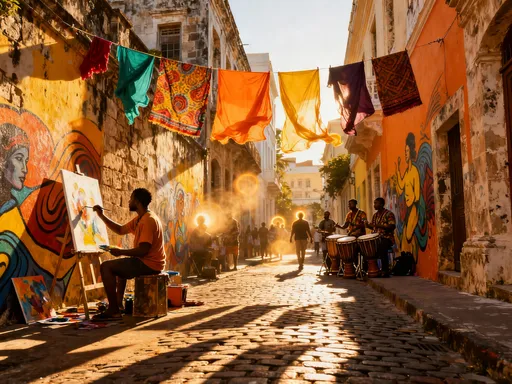
La Ronda is not just a visual feast—it’s a sensory one. The scent of fresh coffee and fried empanadas drifts from small cafés, while the sound of live harp music spills from open doorways. Local artisans line the sidewalks, selling handmade crafts, traditional sweets like *cuylines morochas*, and hand-painted tiles. These elements add movement and warmth to static compositions, turning simple street scenes into vibrant narratives. A photograph of a vendor arranging pastries, backlit by the morning sun, or a musician tuning his instrument beneath a colonial archway—these are the moments that give La Ronda its soul.
For photographers, the best light arrives between 9 a.m. and 11 a.m., when the sun slants through the narrow street at an angle that highlights architectural details without harsh glare. The soft illumination enhances the texture of stucco walls and the grain of wooden beams, making it ideal for both wide shots and macro photography. Evening brings a different charm, as antique-style street lamps flicker to life, casting warm pools of light on the cobblestones. Whether you're capturing the quiet dignity of an old church façade or the lively energy of a street festival, La Ronda offers endless opportunities to tell a story through the lens.
Street Art with a Message in Guápulo
Nestled along the southern edge of Quito’s historic center, the neighborhood of Guápulo climbs the steep slopes of the Guápulo ravine, offering not only breathtaking views but also one of the city’s most expressive open-air galleries. This bohemian enclave has long been a haven for artists, writers, and intellectuals, and its walls tell a story of cultural pride, social awareness, and creative resistance. Unlike generic graffiti, the murals here are deliberate, often large-scale works that blend indigenous symbolism, historical references, and contemporary commentary. A single block might feature a portrait of a Kichwa elder alongside a powerful statement about environmental protection or indigenous rights.
The art in Guápulo is not merely decorative—it’s educational and emotional. One mural depicts the fusion of Andean cosmology with modern life, showing a woman in traditional dress holding a smartphone beneath a star-filled sky. Another honors the legacy of Ecuadorian women leaders, rendered in bold colors and geometric patterns inspired by traditional textiles. These works invite viewers to look beyond the surface, to consider the messages woven into the paint. For photographers, this means every image can carry dual meaning: aesthetic beauty and cultural depth. A well-composed shot can capture both the art and its context—the way it interacts with the surrounding architecture, the people who pause to read it, or the natural light that highlights its textures.
Morning is the optimal time to explore Guápulo for photography. The soft, diffused light enhances the vibrancy of the murals without washing out their colors, and the shadows cast by nearby trees add dimension to the compositions. The narrow, winding streets mean that light changes rapidly, creating dynamic contrasts between illuminated walls and shaded corners. Because the area is less crowded than the main plazas, photographers can take their time framing shots without obstruction. Additionally, the steep inclines and staircases offer unique vantage points—shooting upward along a flight of steps with a mural at the top can create a sense of ascent, both physical and symbolic.
Rooftop Views That Steal the Show
In a city defined by elevation, the best perspectives often come from above. Quito’s rooftops offer some of the most dramatic urban vistas in South America, where the sprawling cityscape meets the snow-capped peaks of the Andes in a single frame. Several historic buildings and modern establishments have opened their terraces to the public, providing accessible vantage points without the need for special permits or hiking gear. Cafés, boutique hotels, and cultural centers in the historic district and the Mariscal Sucre neighborhood feature rooftop spaces designed for both relaxation and photography.
One of the most popular spots is the terrace of the Café Histórico, located near Plaza Grande. From this vantage point, the eye travels across a sea of red-tiled roofs, past the twin towers of La Compañía de Jesús, all the way to the imposing silhouette of El Panecillo, the hilltop statue of the Virgin of Quito. On clear days, the distant volcanoes—Cotopaxi, Cayambe, and Antisana—rise like sentinels on the horizon, their peaks dusted with snow. This blend of urban density and natural grandeur is uniquely Quito, and it’s a composition that rewards wide-angle lenses and careful exposure settings to balance the bright sky with the shadowed streets below.
For a more modern perspective, the rooftop bars in the Mariscal Sucre district offer a contrast between colonial Quito and its contemporary pulse. From here, glass-fronted buildings and illuminated signage create a different kind of beauty—one of light trails, reflections, and urban energy. Sunset and blue hour are particularly magical, as the city transitions from daylight to a tapestry of artificial lights. Silhouettes of church spires against a deepening sky, or the glow of streetlamps tracing the curves of mountain roads, provide endless inspiration. These moments require patience and a tripod, but the results are unforgettable: images that capture not just a view, but a feeling of being suspended between earth and sky.
Plaza Life: Capturing the Pulse
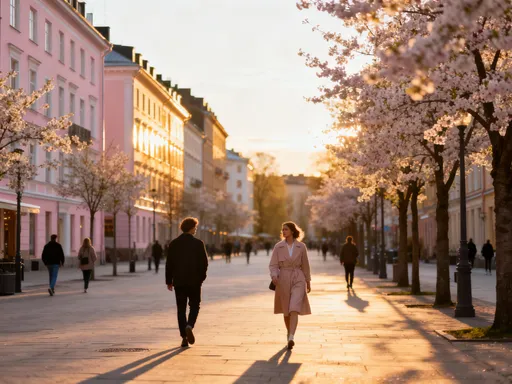
At the heart of Quito’s urban rhythm are its plazas—open spaces that serve as living stages for daily life. Plaza Grande, the city’s main square, is surrounded by the Presidential Palace, the Cathedral, and the Archbishop’s Palace, creating a grand architectural frame. But the real story unfolds at ground level: elderly couples strolling arm in arm, children chasing pigeons, vendors selling fresh fruit and *helados de paila*—hand-churned ice cream in tropical flavors. These spontaneous moments, rich with emotion and movement, are the essence of street photography.
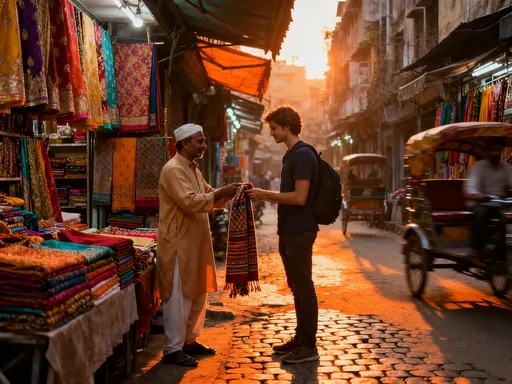
Plaza Santo Domingo, in contrast, pulses with a more vibrant, commercial energy. Here, the central fountain is ringed by flower stalls, artisan markets, and food vendors serving *empanadas de verde*, fried plantain pockets filled with cheese or meat. The air hums with conversation, laughter, and the occasional burst of Andean music from a passing group of musicians. Photographers can capture the interplay of light and color—bright bouquets against weathered stone, steam rising from a fresh *hornado* (roast pork) sandwich, or the concentrated expression of a vendor arranging her wares. These scenes are not staged; they are real, fleeting, and deeply human.
When photographing in public plazas, ethical considerations are essential. While candid shots can be powerful, it’s important to be mindful of personal boundaries. A smile, a nod, or a simple gesture of respect can go a long way. In many cases, asking permission—especially when focusing on individuals—leads to more authentic and collaborative images. Some of the most compelling photographs come from brief interactions: a shared laugh with a street vendor, a moment of connection with an elderly man feeding the birds. These exchanges enrich both the image and the experience, transforming a simple snapshot into a shared memory.
Urban Contrasts: Old Meets New
Quito is a city of contrasts, where the past and present coexist in striking harmony. In the historic center, 16th-century churches stand just blocks away from sleek glass towers and modern shopping centers. This juxtaposition is not chaotic—it’s intentional, a visual dialogue between centuries. The contrast itself becomes a subject, offering photographers rich opportunities for creative composition. Framing a centuries-old church spire against a backdrop of contemporary high-rises, or capturing the reflection of a colonial balcony in a modern office window, turns architecture into metaphor.
The Mariscal Sucre neighborhood, particularly along Avenida Amazonas and Calle Venezuela, exemplifies this blend. Here, boutique shops, international restaurants, and co-working spaces occupy buildings that once housed family homes or small workshops. The area buzzes with a cosmopolitan energy, yet it retains a distinctly Quito identity—seen in the use of local materials, the preservation of historic facades, and the integration of public art. For photographers, this means every block offers a new visual puzzle: how to balance symmetry and asymmetry, texture and smoothness, tradition and innovation.
One effective technique is to use leading lines—such as a cobblestone street that draws the eye toward a modern skyline—or to play with depth of field, blurring the background to emphasize a historic detail while still acknowledging the modern context. Reflections in puddles, windows, or polished surfaces can also create layered images that tell multiple stories at once. These compositions do more than document the city—they interpret it, inviting viewers to consider how Quito honors its past while moving confidently into the future.
Practical Magic: Timing, Light & Local Tips
To truly capture Quito’s essence, timing is everything. The best light for photography occurs in the early morning, between 6:30 and 9:00 a.m., when the city is still waking up and the air is clearest. This is also the ideal time to avoid crowds, especially in popular areas like La Ronda and Plaza Grande. Blue hour—just before sunrise and after sunset—offers a different kind of beauty, with soft, cool tones that enhance the city’s architectural silhouettes and illuminate streetlights in a dreamlike glow. These moments require a bit more technical preparation, such as using a tripod and adjusting ISO settings, but the atmospheric results are well worth the effort.
The high altitude can affect both physical stamina and camera equipment. Visitors may feel short of breath, especially when walking uphill, so pacing is important. Staying hydrated and allowing time to acclimate during the first 24 to 48 hours can make a significant difference. From a photographic standpoint, the thinner air means UV light is more intense, so using a UV filter can help reduce haze in long-distance shots. Additionally, temperature fluctuations between day and night can cause lens fogging, so keeping extra lens cloths and storing equipment in insulated bags is advisable.
Navigating Quito is easiest on foot for the historic center, where most photogenic sites are within walking distance. For longer distances, the city’s modern trolleybus system and ride-sharing apps provide safe and efficient options. Local guides, especially those affiliated with cultural centers or photography tours, can offer valuable insights into lesser-known spots and current events, such as street festivals or art installations. They can also help with language barriers and cultural nuances, ensuring a respectful and enriching experience.
Ultimately, the most unforgettable photographs are not just about technical perfection—they’re about connection. Slowing down, observing, and engaging with the city’s rhythm leads to images that resonate on a deeper level. Whether it’s the quiet dignity of an elderly artisan polishing a wooden frame, the laughter of children playing near a fountain, or the silent majesty of a volcano at dawn, these moments define Quito’s soul.
Quito’s urban spaces aren’t just backdrops—they’re storytellers. From the whisper of history in its stones to the shout of color in its streets, every corner invites you to see deeper, shoot smarter, and travel with purpose.