Wandering Through Whimsy: Salzkammergut’s Hidden Architectural Gems
You know that feeling when a place just feels different? Salzkammergut, Austria, hit me like a quiet thunderclap. I wasn’t chasing landmarks—I was wandering. And in those unplanned turns, I found something magical: centuries-old churches with wooden carvings that breathe history, pastel lakeside villas whispering of imperial summers, and alpine farms stacked like storybooks. This is architecture not as spectacle, but as soul. Let me take you where the buildings tell the stories—of salt miners climbing cliffs, emperors strolling gardens, and generations shaping homes from wind, wood, and water. Here, every beam, gable, and shutter holds a quiet truth about how people live with beauty, necessity, and time.
The Lakeside Charm: Where Water Meets Craftsmanship
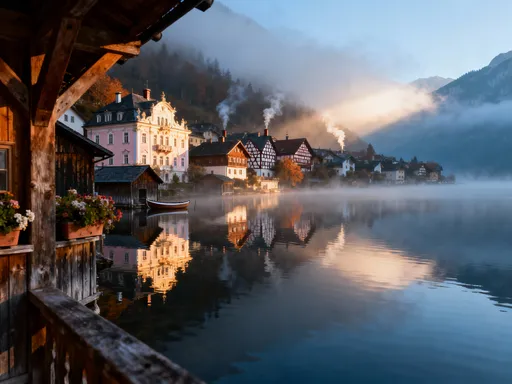
Along the glassy shores of Hallstätter See and Wolfgangsee, architecture doesn’t just stand—it reflects, shimmers, and melts into the landscape. The pastel-hued Landhäuser and Baroque villas that line these waters are not merely picturesque; they are masterclasses in harmony between human design and natural setting. Built over centuries, these homes feature traditional Fachwerk construction—half-timbered frames filled with plaster or brick—whose exposed wooden lattices form intricate geometric patterns. When sunlight dances across the lake’s surface, it bounces off lime-washed walls and dances again on the undersides of overhanging upper floors, creating a visual rhythm that feels almost musical.
These homes were not designed for show alone. Their form followed function with quiet precision. In tight, sloping plots between mountain and water, builders maximized interior space by extending upper stories beyond the ground floor, a technique known as Stockwerkausladung. This overhang not only provided shelter from rain but also created additional living area without encroaching on the narrow waterfront. The brightly painted shutters—crimson, ochre, deep green—were once more than decorative accents. In the 18th and 19th centuries, they signaled a family’s prosperity. The richer the household, the more vibrant the colors, as only those with means could afford high-quality pigments that resisted fading in alpine sun and damp.
Walking these lakeside paths, one becomes attuned to the sensory language of these homes. The creak of weathered larch wood underfoot, the faint scent of lake mist rising at dawn and clinging to cool stone foundations, the soft slap of water against wooden pilings—these are the quiet notes in a symphony of place. Many of these villas still belong to families who have lived here for generations, tending gardens that spill with geraniums and climbing roses. Their presence reminds visitors that this beauty is not preserved behind glass but lived in, cherished, and gently maintained. Even modern renovations respect the original proportions and color palettes, ensuring that new additions do not disrupt the delicate visual balance along the shoreline.
Hallstatt’s Time-Capsule Streets: Steeped in Stone and Story
If Salzkammergut has a heart, it beats in Hallstatt. This UNESCO-listed village clings to a narrow strip of land between the sheer face of the Dachstein limestone cliffs and the mirror-still waters of Hallstätter See. Its streets are not laid out—they grow, twisting and climbing like ivy, following contours that defy straight lines. The architecture here speaks of resilience, ingenuity, and centuries of life shaped by salt. For over 7,000 years, salt mining has defined Hallstatt’s identity, and the village’s buildings bear the imprint of that enduring relationship.
Among the most striking structures are the 16th-century Almhaus buildings, with their steeply pitched roofs designed to shed heavy alpine snow. These roofs, often covered in dark gray slate or wooden shingles, rise like protective shells over narrow facades painted in soft earth tones—ochre, moss green, and faded rose. The Knappenkirche, or Miners’ Church, stands as a spiritual anchor. Its distinctive green onion dome catches the eye from afar, a beacon above the rooftops. Inside, votive offerings and inscriptions honor miners who risked their lives underground, their names etched into wooden panels that have darkened with age and candle smoke.
The density of Hallstatt’s architecture is a direct response to its geography. With no room to spread outward, homes climb vertically, sharing walls and staircases. Narrow alleyways, some barely wide enough for two people to pass, connect homes stacked one above the other. Stone steps, worn smooth by centuries of footsteps, lead from the lakeside promenade to higher terraces where flower boxes overflow with blooms. At dawn, when fog rolls in from the lake and wraps the rooftops like cotton, the village feels suspended between earth and sky. It is in these quiet hours that Hallstatt reveals its true character—not as a museum piece, but as a living, breathing community where history is not displayed but experienced.
Alpine Farmsteads: Simplicity Forged by Necessity
Just beyond the tourist trails, scattered across the green foothills of the Dachstein range, lie the working Bauernhöfe—family-run farmsteads that have shaped the rural soul of Salzkammergut for generations. These are not picturesque replicas but functional homes, built to withstand harsh winters, heavy snow loads, and the daily demands of alpine agriculture. Their architecture is a study in quiet pragmatism, where every element serves a purpose and beauty emerges from utility.
The typical Bauernhof features a massive timber frame, often constructed from locally sourced larch or spruce. Wide eaves extend far beyond the walls, shielding the lower levels from snow and rain. Stone foundations elevate the structure above damp ground, preventing rot and allowing for better air circulation. The hay loft, positioned directly above the livestock stalls, plays a crucial role in insulation—body heat from the animals rises and helps keep the upper floors habitable during freezing months. This ingenious design, passed down through generations, reflects a deep understanding of microclimate and material efficiency.
One of the most striking features of these farmhouses is the wood itself. Larch, in particular, is favored for its durability and natural resistance to decay. Often left untreated, it weathers over decades into a silvery gray, blending seamlessly with the misty mountain backdrop. The absence of paint is not neglect but intention—a respect for the material’s natural life cycle. Observing a farmer repairing a roof beam using traditional mortise-and-tenon joinery, without a single nail in sight, is to witness living heritage. These techniques, rarely taught in modern construction, are preserved through hands-on practice, often from father to son or within tight-knit rural networks.
Contrast these sturdy farmsteads with the elegant summer villas nearby, and the social history of the region comes into focus. While aristocrats and city dwellers built lakeside retreats for leisure, farmers lived in homes shaped by labor, seasonality, and self-sufficiency. Yet, even in their simplicity, these buildings possess a quiet dignity. Carved lintels above doors, decorative brackets under eaves, and carefully arranged window placements reveal a desire for beauty amid hardship. These details are not ornamental excess but expressions of pride, identity, and a deep connection to place.
Sacred Spaces: Churches That Speak in Wood and Light
In the quiet valleys of Salzkammergut, churches are not just places of worship—they are sanctuaries of art, memory, and communal life. Among the most revered is the St. Wolfgang Parish Church, nestled on the shores of Wolfgangsee. Its Pfarrhof complex—a cluster of historic buildings including the rectory, guesthouse, and former school—forms a courtyard that feels both intimate and timeless. But it is the church’s interior that leaves a lasting impression, a space where light, wood, and devotion converge.
The church is renowned for its Schnitzkunst, the intricate woodcarving tradition that reached its peak in the late Gothic and early Baroque periods. The centerpiece is the Pacher Altar, crafted in the 15th century by Michael Pacher, one of the greatest woodcarvers of the Alpine region. Every inch of the altar is alive with figures—saints in flowing robes, angels with outstretched wings, vines twisting into fantastical patterns. The level of detail is staggering: individual strands of hair, folds in fabric, and expressions of serene contemplation are rendered with such precision they seem to breathe. This is not art meant to impress from a distance but to invite close inspection, to draw the viewer into a sacred narrative.
The fusion of Gothic verticality and Baroque ornamentation creates a unique ecclesiastical aesthetic. Tall, narrow windows allow shafts of light to pierce the dim interior, illuminating gilded details and casting long shadows across centuries-old pews. On a rainy afternoon, when clouds hang low over the lake, the atmosphere inside becomes almost otherworldly. The scent of candle wax mingles with the deep, earthy aroma of aged timber. The floorboards creak underfoot, not as signs of decay but as echoes of countless footsteps—pilgrims, villagers, children learning their first prayers.
What sets these churches apart is their sense of continuity. They are not frozen in time but actively used, maintained, and loved. Services are still held, festivals celebrated, and local choirs practice in the nave. The wear on the wooden pews, the slight tilt of ancient doors, the patchwork repairs on stained glass—all speak of a living tradition. These spaces are not relics but living parts of the community, where spirituality and craftsmanship are inseparable.
Imperial Echoes: The Grandeur of Bad Ischl
Thirty kilometers east of Hallstatt lies Bad Ischl, a town that once pulsed with imperial energy. From the mid-19th century until the end of the Austro-Hungarian Empire, it served as the summer residence of Emperor Franz Joseph I and his wife, Empress Elisabeth. The Kaiservilla, now a museum, stands as the centerpiece of this legacy—a stately home that blends comfort, elegance, and subtle authority. Its pale yellow façade, framed by green shutters and shaded by chestnut trees, exudes a refined calm, while the surrounding park offers sweeping views of the Traun River valley.
The architecture of Bad Ischl reflects the Bäderarchitektur—spa architecture—style popular in 19th-century Central Europe. Characterized by symmetrical facades, stucco ornamentation, wrought-iron balconies, and large windows, these buildings were designed to promote light, air, and leisure. The town’s layout encouraged the Spaziergang, the leisurely stroll, with tree-lined promenades, ornamental gardens, and cafés where visitors could see and be seen. Even today, the rhythm of life in Bad Ischl feels genteel, unhurried, shaped by a culture of refinement and quiet enjoyment.
The Kaiservilla itself was more than a retreat; it was a political and cultural hub. Important decisions were made within its drawing rooms, and the town became a meeting place for artists, musicians, and aristocrats. The architecture reflects this dual role—private yet public, intimate yet grand. Rooms are modest in scale but rich in detail: hand-painted wallpaper, parquet floors, and period furnishings create an atmosphere of cultivated taste. The emperor’s study, with its floor-to-ceiling bookshelves and writing desk, feels particularly human, a space of solitude and routine.
While the imperial era has passed, its architectural imprint remains. Strict preservation laws ensure that new construction respects the historic character of the town. Buildings must adhere to height limits, use compatible materials, and maintain traditional rooflines. As a result, Bad Ischl avoids the pitfalls of overdevelopment. It is a place where history is not reenacted but lived, where the past is not a performance but a foundation. Walking its streets, one senses the weight of tradition—not as a burden, but as a quiet assurance of continuity.
Modern Meets Tradition: How New Builds Honor the Old
Salzkammergut is not frozen in the past. Homes are still being built, renovated, and adapted to contemporary life. Yet, unlike many tourist regions where modern architecture clashes with historic surroundings, here a careful balance is maintained. Strict preservation laws, enforced by regional heritage boards, require that new construction align with local architectural traditions. This does not mean replication, but thoughtful interpretation—respecting the spirit of place without sacrificing innovation.
New homes in the region typically feature pitched roofs, wooden cladding, and modest footprints. The use of local materials—especially larch and spruce—is encouraged, both for aesthetic harmony and environmental sustainability. Architects are increasingly finding creative ways to blend traditional forms with modern technologies. Some homes incorporate steel frames for structural support, allowing for larger open spaces while maintaining the external silhouette of a classic alpine house. Others use large glass panels to frame panoramic views, but position them carefully to avoid disrupting the rhythm of the streetscape.
In lakeside zones, visual harmony is paramount. New buildings must not obstruct views or cast long shadows on neighboring properties. Color palettes are often restricted to soft, natural tones—earthy browns, muted greens, and off-whites—that blend with the landscape rather than compete with it. Even rooftop installations, such as solar panels, are integrated discreetly, sometimes mounted flush with the roofline or placed on secondary structures like garages.
Beyond aesthetics, sustainability is quietly shaping new construction. Green roofs, planted with native grasses and wildflowers, provide insulation and support biodiversity. Passive solar design—orienting homes to maximize winter sunlight and minimize summer heat—is increasingly common. Rainwater harvesting systems and energy-efficient windows are standard in many new builds. These features are not marketed as novelties but as responsible choices, part of a broader cultural commitment to stewardship of the land.
Wandering as a Way of Seeing: Why Architecture Reveals the Soul of Place
In an age of curated itineraries and timed tours, the deepest understanding of a place often comes not from seeing more, but from seeing slowly. Salzkammergut rewards the aimless walker—the one who lingers in a village square, traces the grain of a carved doorframe, or pauses to watch sunlight move across a stone wall. It is in these unscripted moments that architecture reveals its true voice, not as a collection of styles or periods, but as a living dialogue between people and place.
Every building in this region tells a story shaped by geography, history, and culture. The salt miner’s home, clinging to a cliffside, speaks of endurance. The lakeside villa, with its bright shutters and flower-filled balcony, whispers of summer ease. The alpine farmhouse, with its wide eaves and weathered wood, honors the rhythm of the seasons. And the village church, glowing from within on a winter evening, stands as a testament to faith, artistry, and community.
To travel here is not to collect sights but to absorb a way of being. It is to understand that beauty is not separate from function, that tradition is not opposed to progress, and that the most profound experiences often come from stillness, attention, and respect. The architecture of Salzkammergut does not shout; it murmurs, invites, and endures. It reminds us that homes are more than shelters—they are vessels of memory, expressions of identity, and quiet declarations of belonging.
So let your steps be unhurried. Let your gaze linger. Let the buildings speak. In their beams and stones, in their colors and silences, you will find not just the history of a region, but a deeper truth about how we live with beauty, time, and each other. Travel slowly. Listen closely. And discover that the soul of a place is often written in wood, stone, and light.