Why I Finally Found Calm: My Real Qigong Wellness Journey
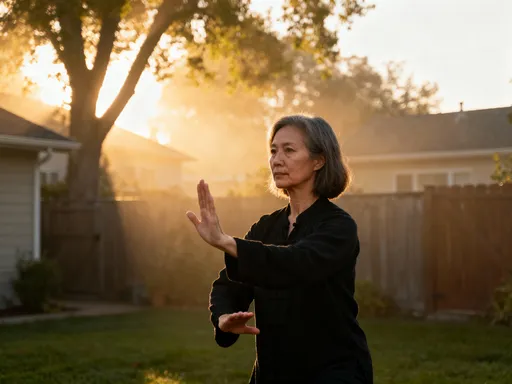
For years, I chased quick fixes for stress and low energy—until I tried qigong. This ancient practice changed how I feel every single day. It’s not magic, just mindful movement and breath. I started with just five minutes a day and noticed a shift—more focus, less tension. If you’re overwhelmed or drained, this could be what you’ve been missing. Let me share what actually worked for me. It wasn’t a dramatic transformation, but a quiet unfolding of clarity, calm, and sustained energy that I hadn’t felt in decades. As a woman in my forties balancing family, work, and personal well-being, I had grown accustomed to running on empty. Coffee, naps, and scrolling through my phone became my go-to coping tools. But none of them truly restored me—until I discovered qigong.
The Burnout Breakthrough That Changed Everything
Like so many women in midlife, I carried a quiet but constant burden of fatigue. I was sleeping seven hours a night, eating fairly well, and not dealing with any major illness—yet I felt mentally foggy, emotionally reactive, and physically drained by mid-afternoon. My shoulders were always tight, my jaw clenched without realizing it, and my mind raced even when I sat still. I tried everything: intense workouts that left me more exhausted, guided meditations that I could never stick with, and even prescription sleep aids that dulled my mornings. Nothing addressed the root of the problem—my nervous system was stuck in overdrive.
Then I heard about qigong from a friend who mentioned how it helped her recover after surgery. She wasn’t athletic, didn’t meditate, and had never been into wellness trends—but she said qigong was the one thing that helped her feel truly restored. Skeptical but desperate, I looked into it. What stood out was how gentle it seemed. Unlike high-intensity interval training or long yoga sessions that felt like another chore, qigong promised restoration without strain. It wasn’t about pushing harder—it was about learning how to slow down with purpose. That idea alone felt revolutionary.
What made qigong different from other wellness approaches I’d tried was its focus on regulation rather than exertion. While running or weightlifting can be beneficial, they still activate the sympathetic nervous system—the same system that kicks in during stress. For someone already running on chronic low-grade stress, adding more physical intensity wasn’t the answer. Qigong, on the other hand, works with the body’s natural rhythms to promote deep relaxation and energy renewal. It met me where I was: tired, tense, and in need of a reset that didn’t require more effort.
What Exactly Is Qigong? (And Why It’s Not Just “Slow Exercise”)
At its core, qigong (pronounced “chee-gong”) is a mind-body practice rooted in Traditional Chinese Medicine that combines slow, intentional movements with coordinated breathing and focused awareness. The word itself comes from two Chinese characters: *qi*, meaning vital life force or energy, and *gong*, meaning cultivation or practice. So, qigong literally means “energy cultivation.” For thousands of years, it has been used to support health, prevent illness, and promote longevity.
It’s easy to mistake qigong for slow-motion exercise or a form of gentle stretching, but it’s much more than that. While it involves physical movement, the emphasis is on internal awareness—the flow of breath, the quality of attention, and the subtle sensations in the body. Unlike aerobic workouts that aim to elevate the heart rate, qigong aims to harmonize it. It’s not about burning calories; it’s about balancing the body’s energy systems to create a state of calm alertness.
Some people confuse qigong with tai chi, yoga, or meditation—but while they share similarities, each has its own purpose and structure. Tai chi is a martial art that evolved from qigong and includes more complex sequences. Yoga, while also mind-body focused, often emphasizes flexibility and strength through postures. Meditation typically involves sitting still and observing the mind. Qigong, by contrast, integrates movement, breath, and mindfulness in a way that makes it uniquely accessible—especially for those who struggle to sit still or feel disconnected from their bodies.
Historically, qigong was practiced by monks, healers, and martial artists to cultivate vitality and mental clarity. In modern times, it has gained recognition as a complementary health practice, particularly for stress reduction, pain management, and improving quality of life. Hospitals and wellness centers around the world now offer qigong programs, especially for people dealing with chronic fatigue, anxiety, or recovery from illness.
How Qigong Works: The Science Behind the Stillness
Though qigong originates from ancient traditions, modern science is beginning to validate its benefits. The key lies in how it influences the autonomic nervous system—the part of the nervous system that controls involuntary functions like heart rate, digestion, and stress response. When we’re under chronic stress, the sympathetic nervous system (the “fight-or-flight” response) becomes overactive. Qigong helps activate the parasympathetic nervous system—the “rest-and-digest” mode—through slow, rhythmic breathing and gentle movement.
Research has shown that regular qigong practice can lead to measurable physiological changes. Studies published in journals such as *Evidence-Based Complementary and Alternative Medicine* and *The Journal of Alternative and Complementary Therapies* have found that qigong reduces levels of cortisol, the primary stress hormone. Lower cortisol levels are linked to improved mood, better sleep, and reduced inflammation in the body. This is especially important for women in their 30s to 50s, who often face hormonal shifts that can amplify stress sensitivity.
Another key benefit is improved heart rate variability (HRV), a marker of nervous system resilience. Higher HRV means the body can adapt more easily to stress and recover faster. Qigong has been shown to increase HRV, indicating that practitioners develop greater emotional and physiological flexibility over time. This doesn’t mean you’ll never feel stressed again—but you’ll be better equipped to navigate it without spiraling.
Breath is central to these effects. In qigong, breathing is deep, slow, and diaphragmatic—filling the lower lungs rather than shallow chest breathing, which is common during stress. This type of breathing increases oxygen delivery to the cells, improves circulation, and signals safety to the brain. Over time, this recalibrates the body’s stress response, making calmness the new default rather than the exception.
These changes translate into real-world benefits: fewer tension headaches, less muscle stiffness, improved sleep quality, and sharper mental focus. Many women report feeling more grounded and less reactive in daily life—whether it’s handling a child’s tantrum, managing work deadlines, or simply finding peace in a quiet moment. Qigong doesn’t eliminate life’s challenges, but it builds an inner reservoir of resilience to meet them with greater ease.
My 3 Simple Moves That Made the Biggest Difference
When I first started, I was overwhelmed by the variety of qigong forms available. Some looked complex, others too abstract. But I learned that simplicity is the strength of qigong. You don’t need to master dozens of movements to benefit. In fact, just three foundational exercises became the cornerstone of my daily practice. Each takes less than three minutes and can be done in a small space—no equipment, no special clothing, no prior experience needed.
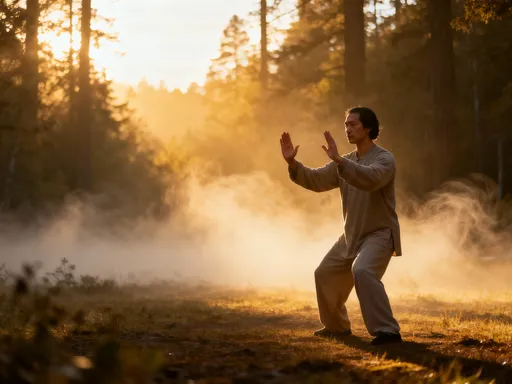
The first is called Lifting the Sky. Stand with your feet shoulder-width apart, knees slightly bent. Begin with your hands at your lower abdomen, palms up. Inhale slowly as you raise your arms in front of you, then overhead, as if lifting a heavy ball of light. Keep the movement smooth and relaxed. At the top, turn your palms to face the sky, stretch gently through the fingertips, and imagine drawing energy from above. Exhale as you lower your arms back down in front of the body, palms turning down, returning the energy to your center. Repeat for 6–9 cycles. This movement helps open the chest, improve posture, and stimulate the flow of energy through the body’s central channel.
The second is Separating Heaven and Earth. Start in the same stance. Inhale as you raise your left hand palm-up toward the sky, while your right hand presses gently down toward the earth, palm facing down. Imagine a connection between your hands, as if you’re holding a ball of energy between heaven and earth. Hold for a breath, then exhale as you switch sides—right hand rises, left hand lowers. Continue alternating for 6–9 repetitions. This exercise promotes balance, both physically and energetically. It helps release tension in the shoulders and encourages a sense of being grounded while still reaching upward—much like the dual roles many women navigate every day.
The third is Shaking the Tree. Stand with feet slightly wider than hip-width, knees soft. Let your arms hang loosely at your sides. Begin to gently bounce on the balls of your feet, allowing the movement to ripple up through your body. Let your arms, shoulders, and head shake naturally—like leaves on a tree in a breeze. Keep the breath relaxed and continuous. Do this for 1–2 minutes. This may look unusual, but it’s incredibly effective for releasing stored tension. It loosens tight muscles, improves circulation, and helps break the cycle of mental chatter. Afterward, stand still and notice the tingling sensation and deep sense of release.
These three movements form a complete mini-practice. I often do them in sequence every morning, but they can also be done separately throughout the day—especially when I feel tension building. The beauty is that they’re adaptable: you can do them slower, faster, or with smaller motions depending on your energy level. There’s no “perfect” way—only presence and intention.
When (And How Long) to Practice for Real Results
One of the most common questions I had was: how much time does it really take? The good news is, not much. I started with just five minutes a day—sometimes even three. The key isn’t duration; it’s consistency. Think of qigong like watering a plant. A little every day does more than a flood once a week.
Morning is my preferred time. Doing a short session after waking helps set a calm tone for the day. It’s like giving my nervous system a gentle reset before the demands of life begin. I don’t need to shower or change clothes—just step into a quiet corner of my living room, put on soft music or silence, and begin. Even on rushed mornings, I’ve learned that five minutes of qigong makes me more focused and less reactive than skipping it altogether.
Evening practice is also powerful, especially if you struggle with winding down. After a long day of mental or emotional labor, qigong helps transition from “doing” mode to “being” mode. It signals to the body that it’s safe to relax. I’ve found that a short session before bed improves my sleep quality—fewer nighttime awakenings and a deeper sense of rest.
As I built the habit, I gradually increased to 10–15 minutes most days. But I never force it. Some days, I only do one movement. Some days, I’m tired and move more slowly. And that’s okay. In fact, I’ve learned that even a “bad” qigong session—where my mind is distracted or my body feels stiff—still leaves me calmer than if I hadn’t practiced at all. The act of showing up, of pausing to breathe and move with awareness, is itself a form of self-care.
Common Mistakes Beginners Make (And How to Avoid Them)
When I first started, I made nearly every mistake possible. I wanted to do it “right,” so I overcomplicated everything. I watched long videos, tried to memorize complex sequences, and judged myself harshly when I forgot the next move. I also expected immediate results—more energy, less anxiety—within days. When those didn’t come, I almost quit.
The biggest mistake is treating qigong like a workout. It’s not about performance, calories burned, or achieving a certain look. Qigong is about softness, not effort. Pushing too hard, moving too fast, or striving for perfection defeats the purpose. The goal is to cultivate ease, not exhaustion. I had to retrain my mindset: this wasn’t another item on my to-do list to check off perfectly, but a daily invitation to reconnect with myself.
Another common pitfall is comparing your practice to others. I once joined a virtual class and felt discouraged watching more experienced practitioners move with such fluidity. But qigong isn’t a competition. It’s a personal journey. Your practice will look different from someone else’s—and that’s exactly as it should be. Some days you’ll feel energized; other days, you’ll feel sluggish. Both are valid.
To stay consistent, I created small supports. I set a daily reminder on my phone. I chose a dedicated spot near a window where I could see the sky—this small visual cue helped me associate the space with calm. I wear loose, comfortable clothing so there’s no physical restriction. And I let go of the idea that I need special gear or a perfect environment. Qigong can be done anywhere: in a hotel room, during a work break, even in a quiet corner of a park.
The most important tip I can offer is this: start small and be kind to yourself. Five minutes is enough. One movement is enough. The habit matters more than the form. Over time, the benefits accumulate quietly, like drops filling a bucket.
Beyond the Body: How Qigong Transformed My Mindset
While the physical benefits of qigong are real—better posture, less tension, more energy—the deeper transformation has been mental and emotional. I’ve become more patient—with myself, with my family, with life’s inevitable delays and frustrations. I notice when I’m starting to feel overwhelmed and can pause, breathe, and reset before reacting. This small shift has improved my relationships and reduced unnecessary conflict.
Qigong has also deepened my self-awareness. Through the practice of moving with attention, I’ve become more attuned to my body’s signals. I notice when I’m holding my breath during a stressful call. I feel the early signs of tension in my neck before it turns into a headache. This awareness gives me the power to respond—by taking a breath, stepping away, or doing a quick qigong movement—before small stresses escalate.
Perhaps the most profound change has been in my sense of inner stability. Life hasn’t gotten easier—work still gets busy, children still have needs, unexpected challenges still arise. But I feel more grounded, as if I have an anchor inside me. I don’t get swept away by every emotion or external demand. This doesn’t mean I’m never stressed or sad—it means I recover faster. I return to center more easily. And that makes all the difference.
Over time, the discipline of showing up for just a few minutes each day has spilled over into other areas of my life. I’m more consistent with healthy eating, more likely to rest when I need it, and more willing to say no to things that drain me. Qigong has taught me that small, intentional actions, repeated over time, create lasting change. It’s not about grand gestures—it’s about daily commitments to your well-being.
Qigong didn’t fix everything overnight—but it gave me tools to feel more grounded, present, and energized. Unlike fleeting wellness trends, it’s a practice that grows with you. You don’t need special skills or hours a day. Just a little space, some breath, and openness to try. If you’re seeking real, gentle change, this might be your next step.